


A Guide to Boat Upholstery Cleaning for Vinyl and Fabric
Proper boat upholstery cleaning is more than just a quick wipe-down—it’s one of the most important things you can do to protect your boat's value and keep it looking sharp. Think of it as preventative maintenance against the constant assault from sun, salt, and moisture.
A consistent cleaning routine is your best defense against a hugely expensive reupholstery job down the road.
Why Upholstery Care Protects Your Investment
Letting your boat’s interior go is one of the fastest ways to tank its value. It's constantly exposed to a brutal combination of intense UV rays, saltwater spray, and damp, humid air. This isn't just about looks; these elements are actively breaking down the vinyl and fabrics on your seats and cushions.
For marine vinyl, this constant exposure causes the plasticizers—the stuff that keeps it soft and flexible—to leach out. The result? Brittle, faded material that’s just waiting to crack. Fabric upholstery has its own problem: it loves to soak up moisture, turning your cushions into a perfect breeding ground for stubborn mildew and that musty smell you can never seem to shake.
The Financial Hit from Neglect
It pays to shift your mindset from just "cleaning" to long-term "preservation." Being proactive is a smart financial move, plain and simple. Good maintenance directly prevents the need for a total reupholstery job, which can easily set you back thousands of dollars.
On the flip side, a pristine interior gives your boat’s resale value a serious boost. Industry insiders know that visible marine growth, stains, and cracked vinyl can slash the resale price of a used boat by 15-20%. It's often the first thing a potential buyer notices.
You just can't separate maintenance from value. It's a fact that issues like cracking vinyl affect 40% of boats over five years old. From fuel spills to sun fading, upholstery takes a beating, and specialized care is critical. The demand for proper marine cleaning products reflects this, with the global market hitting USD 100.1 billion in 2023 and projected to double by 2030. You can discover more insights about this expanding market right here.
Ultimately, every hour you put into cleaning your boat's upholstery is a direct investment in its longevity and financial worth. It’s the foundational skill every boat owner needs to master.
Building Your Boat Upholstery Cleaning Arsenal
Any seasoned boat owner knows that the secret to keeping your upholstery looking sharp isn't one magic spray—it's having the right tools on hand before you need them. Building a dedicated cleaning kit transforms a dreaded chore into a quick, satisfying job. You'll be ready for anything from a routine wipe-down after a day on the water to a full-blown seasonal deep clean.
The basics are simple but non-negotiable. You'll want a good stack of clean, high-quality microfiber towels. They're perfect for wiping down vinyl or fabric without leaving behind annoying lint. Next, grab a set of soft-bristle brushes in a few different sizes. These are your best friend for getting into textures and seams to lift dirt without scratching or damaging the material.
A simple way to think about it is breaking the job into two categories: cleaning up existing messes and protecting against new ones.
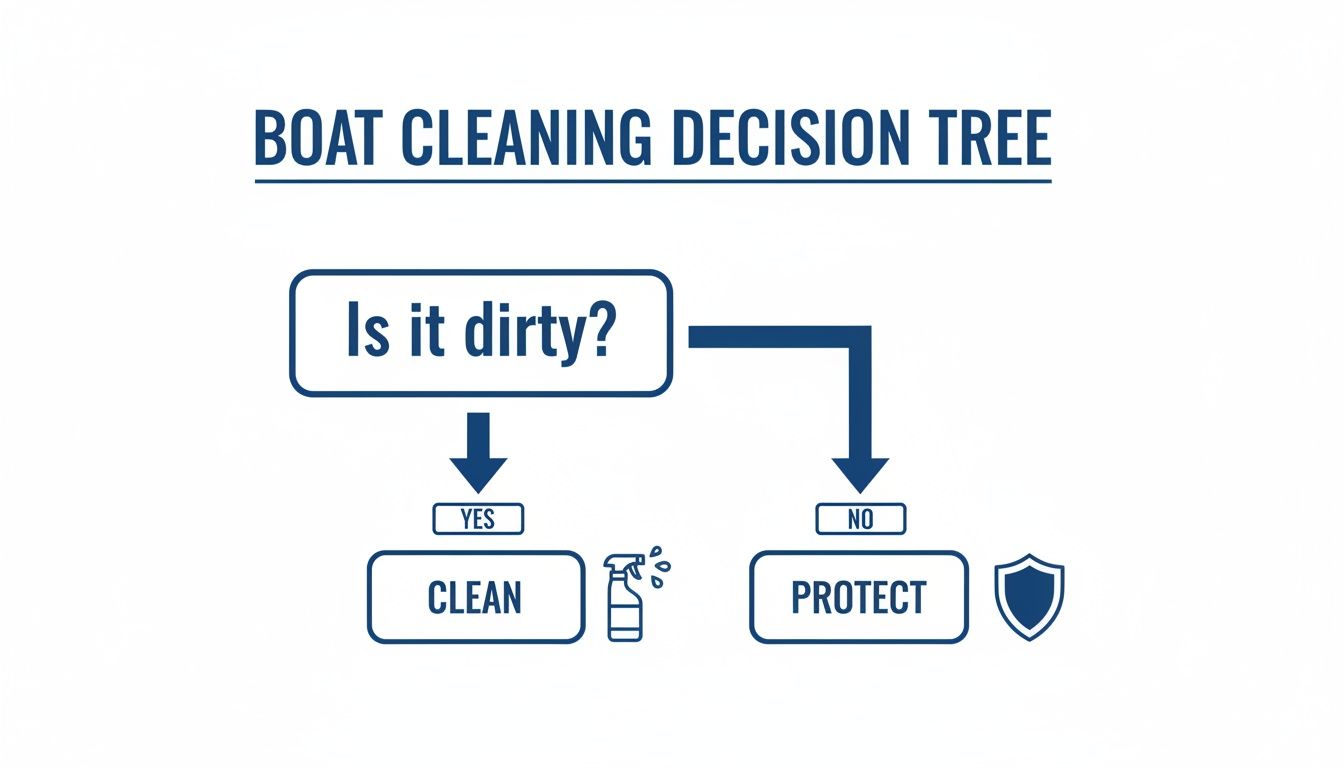
Every time you look at your seats, you're making this choice. Is there a spill to tackle now, or is everything clean and ready for a protective spray?
Choosing Your Cleaning Agents
Here's where things get critical. Using the wrong cleaner—like a harsh household bleach or an ammonia-based glass cleaner—can strip UV coatings, dry out vinyl, and cause irreversible damage. Your boat lives in a harsh environment, and it needs specialized care.
Your kit should be stocked with a few key solutions for different situations:
- pH-Neutral Soap: Think of this as your daily driver for cleaning. A mild, pH-neutral soap mixed with water is gentle enough for any upholstery type. It's perfect for wiping away light dust, salt spray, and general grime without harming protective finishes.
- Dedicated Marine Vinyl Cleaner: When you're dealing with tougher stuff like sunscreen residue, body oils, or scuff marks, you need something with more muscle. A specific marine vinyl cleaner is formulated to cut through that grime while often containing conditioners that keep the material from getting brittle.
- Enzymatic Stain Remover: This is your specialist for organic stains. For things like bird droppings, spilled drinks, or the dreaded mildew spots, an enzymatic cleaner is a must. The enzymes literally break down the stain on a molecular level, lifting it out of the vinyl or fabric.
- Magic Erasers: Keep a few on hand, but use them with caution. These are fantastic for getting rid of stubborn scuff marks on vinyl that nothing else will touch. Just remember they're mildly abrasive, so use them gently with a little water.
For a true deep clean, especially on fabric cushions, nothing beats a small wet/dry shop vacuum. It lets you extract all the dirty water and cleaning solution, which is crucial for preventing saturation and stopping mildew before it can start.
Always look for products specifically labeled as "marine-grade." These are built to stand up to the abuse of sun and saltwater, and they're usually biodegradable, which is much better for the water we all enjoy.
To make things easy, it helps to gather everything in one spot. Before you start, round up all your tools and cleaners so you're not running back and forth. This simple table breaks down the essentials.
Your Essential Boat Upholstery Cleaning Toolkit
| Tool or Agent | Primary Purpose | Best For Vinyl or Fabric |
|---|---|---|
| Microfiber Towels | Wiping, drying, and general cleaning without lint | Both |
| Soft-Bristle Brushes | Gently scrubbing textures, seams, and lifting dirt | Both |
| pH-Neutral Soap | Routine, gentle cleaning of light dirt and grime | Both |
| Marine Vinyl Cleaner | Removing tough grime like sunscreen and scuffs | Vinyl |
| Enzymatic Cleaner | Tackling organic stains like mildew and food spills | Both |
| Magic Eraser | Removing stubborn scuff marks and stains | Vinyl (use gently) |
| Wet/Dry Vacuum | Extracting dirty water and cleaner for deep cleaning | Fabric (especially) |
| UV Protectant Spray | Shielding surfaces from sun damage and fading | Vinyl (primarily) |
Having these items ready to go in a portable bucket or caddy makes maintenance a breeze.
Assembling Your Complete Kit
To be fully prepared, keep all your supplies organized together. You can build your own kit from scratch or find comprehensive options like a Star Brite boat care bucket that bundles many of the essentials for you. The key is to have everything ready to go, so you can tackle any cleaning job the moment you spot it.
Your Guide to Cleaning Marine Vinyl Upholstery
Marine vinyl is the workhorse of boat upholstery for a reason—it’s tough, water-resistant, and built to handle the elements. But "tough" doesn't mean "invincible." Sunscreen, dirt, and stray scuff marks can quickly turn pristine white seats into a dingy, embarrassing mess.
Properly cleaning your boat's vinyl isn't just about looks; it's about preserving the material's integrity for the long haul. The good news is, keeping your vinyl looking sharp is straightforward with the right approach. It really comes down to three phases: a good prep, a gentle but thorough cleaning, and a final protective layer to keep it safe from the elements.
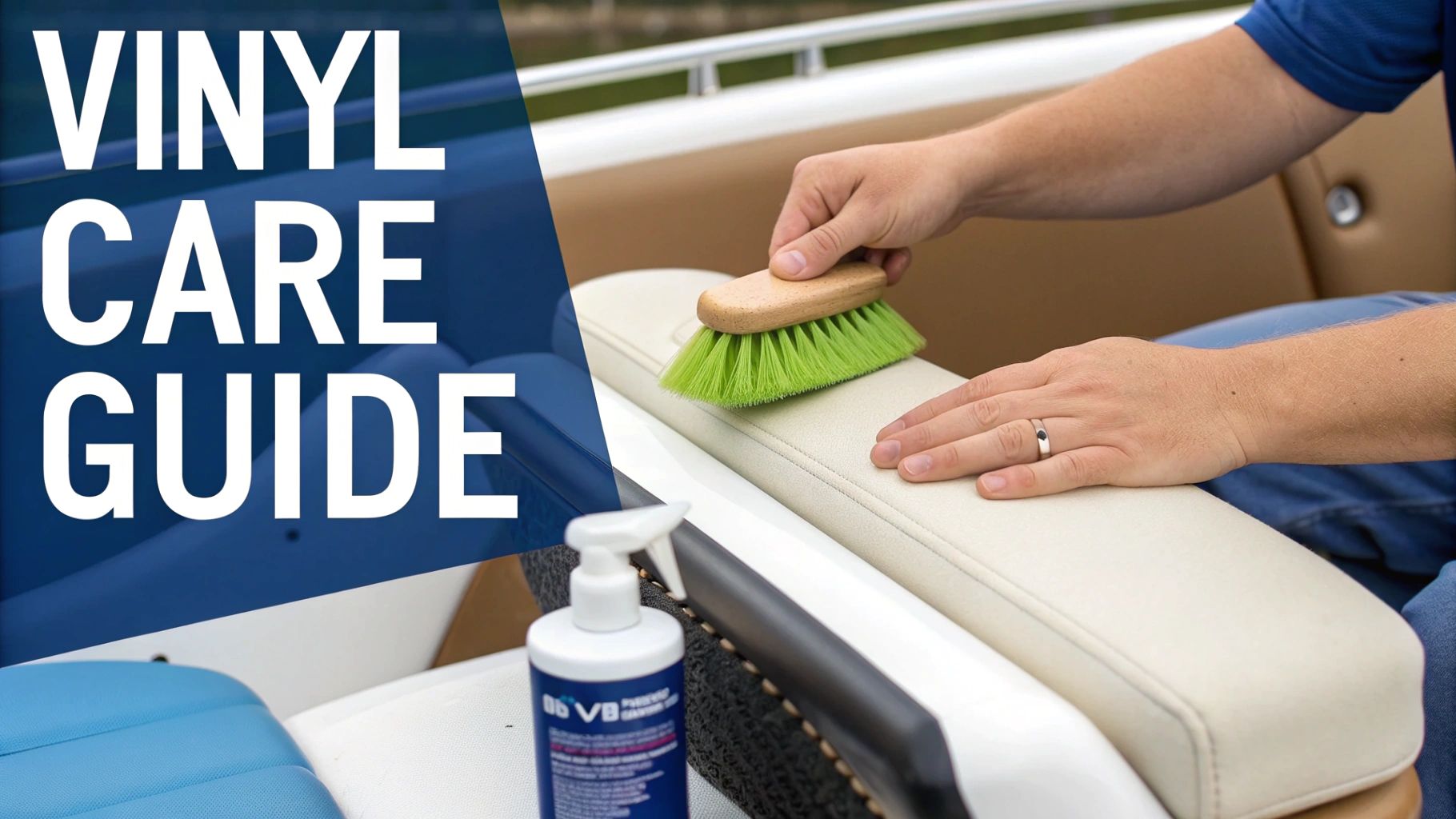
Start with a Thorough Prep
Before you even think about breaking out the cleaners, your first job is to get rid of all the loose junk. Think of it like sweeping the floor before you mop.
Grab a vacuum with a soft brush attachment and go over every inch of the upholstery. Pay extra attention to the seams and crevices where sand, salt crystals, and crumbs love to hide. This step is more important than it sounds—scrubbing a seat covered in abrasive sand is a surefire way to create tiny scratches that will just trap more dirt later.
The General Cleaning Process
With the loose debris gone, you can get to washing. For routine cleaning, you don't need some aggressive, heavy-duty chemical. In fact, using one can do more harm than good by stripping the vinyl's protective topcoat.
Instead, a simple solution of a pH-neutral boat soap and warm water is all you need. This gentle approach is perfect for lifting everyday dirt and salt residue without damaging the material.
Here’s how to get it done:
- Dip a soft-bristle brush into your soapy water.
- Gently scrub the vinyl in small, overlapping circles. This helps lift dirt from the grain of the vinyl without being too harsh.
- Work on one cushion or section at a time so the soap doesn't dry on the surface.
- Wipe away all the soap residue with a clean, damp microfiber towel.
- Follow up immediately with a dry microfiber to soak up any excess moisture.
It’s absolutely critical to rinse away all cleaner residue. Any soap left behind creates a sticky film that actually attracts more dirt and can even promote mildew growth down the road. A thorough wipe-down is a non-negotiable final step.
Tackling Common Vinyl Stains
Life on a boat means dealing with some specific, stubborn stains. Sunscreen is a classic enemy, often leaving behind an oily, yellowish stain. For this, a dedicated marine vinyl cleaner is your best friend, as it's formulated to break down those particular oils.
For scuff marks from shoes or gear, a magic eraser can work wonders. Just be sure to use it gently with a bit of water, as it is mildly abrasive. I always recommend testing it in a hidden spot first—like under a cushion—to make sure it doesn't dull the vinyl's finish.
Lock It In with UV Protection
After all your hard work, the final step is to protect the vinyl from its biggest threat: the sun. UV rays are what cause vinyl to fade, dry out, and eventually crack.
Applying a quality marine UV protectant spray is like putting sunscreen on your upholstery. It's the key to longevity, creating a barrier against sun damage while also helping repel future stains. That makes your next cleaning session much, much easier. Just spray it on, wipe it evenly with a clean cloth, and you're good to go.
How to Clean Fabric and Canvas Boat Interiors
Fabric and canvas interiors demand a completely different playbook than vinyl. There's no protective surface here—these materials are porous and absorbent, making them magnets for moisture, deep-set stains, and every boater's arch-nemesis: mildew. Cleaning fabric properly is less about wiping and more about careful extraction.When you're caring for your boat's softer side, from cabin cushions to bimini tops, the name of the game is moisture control. A small spill can quickly become a permanent problem if it soaks into the foam padding underneath, so your first instinct must always be to blot, not rub.
Spot Cleaning Common Spills
When a fresh spill happens—whether it's morning coffee, a greasy snack, or a rogue fishing lure—you’re on the clock. Acting fast can mean the difference between a minor cleanup and a major stain that requires a full deep-cleaning session.
Your first move should always be to blot gently with a clean, dry cloth. Always work from the outside of the spill inward to keep from spreading it. For spots that are a bit more stubborn, a mild solution of pH-neutral soap and water is your best friend.
- Mix Your Solution: Add a small amount of soap to a bucket of water. You want a light, sudsy mix, not a thick, foamy mess.
- Apply Sparingly: Lightly dampen a clean microfiber cloth in the solution. Never pour liquid directly onto the fabric.
- Blot, Don't Scrub: Gently blot the stained area. Getting aggressive and scrubbing can damage the fabric fibers and only push the stain deeper.
- Rinse and Dry: Use a separate cloth dampened with only fresh water to blot the area, effectively "rinsing" the soap out. Follow up by pressing a dry towel firmly on the spot to soak up as much moisture as possible.
This simple technique is surprisingly effective for a huge range of common boat stains. The secret is using as little moisture as you can to get the job done.
Performing a Deep Clean Without Oversaturation
For that big end-of-season clean or when you're tackling larger soiled areas, you'll need to go deeper. The single biggest mistake boat owners make is oversaturating their fabric cushions. This traps moisture deep inside the foam, creating the perfect breeding ground for mildew.
This is where a carpet extractor or a wet/dry shop vacuum becomes your most valuable tool. These machines let you flush out dirt with a cleaning solution and immediately pull the dirty liquid right back out.
The goal is to clean the fabric, not the foam core. A wet/dry vac is crucial because it removes 90% or more of the moisture you introduce, preventing the water from ever reaching the inner padding. This is the single most important technique for preventing mildew growth.
Start by vacuuming the entire surface to get rid of any loose dirt and debris. Then, working in small sections, spray a light mist of a fabric-safe marine cleaner. Let it sit for a moment before using a soft-bristle brush to gently work it in. Immediately follow up with your wet/dry vac to extract all the moisture and grime.
Reapplying Waterproofing Treatments
After a thorough cleaning, you've likely stripped away the fabric's original protective waterproof coating. Reapplying it is a critical final step to restore its ability to repel water and resist future stains.
Once the fabric is 100% bone dry—and this could take a full day in the sun—it's time to reapply a quality marine-grade fabric guard. Make sure you're in a well-ventilated area and apply a light, even coat. This protective barrier is your best defense, ensuring water beads up and rolls off rather than soaking in.
Keep your cleaning tools in top shape with quality accessories like a Star Brite Microfiber Reggae Wash Mitt to ensure they are always ready for the next job.
Tackling Advanced Stains and Mildew Problems
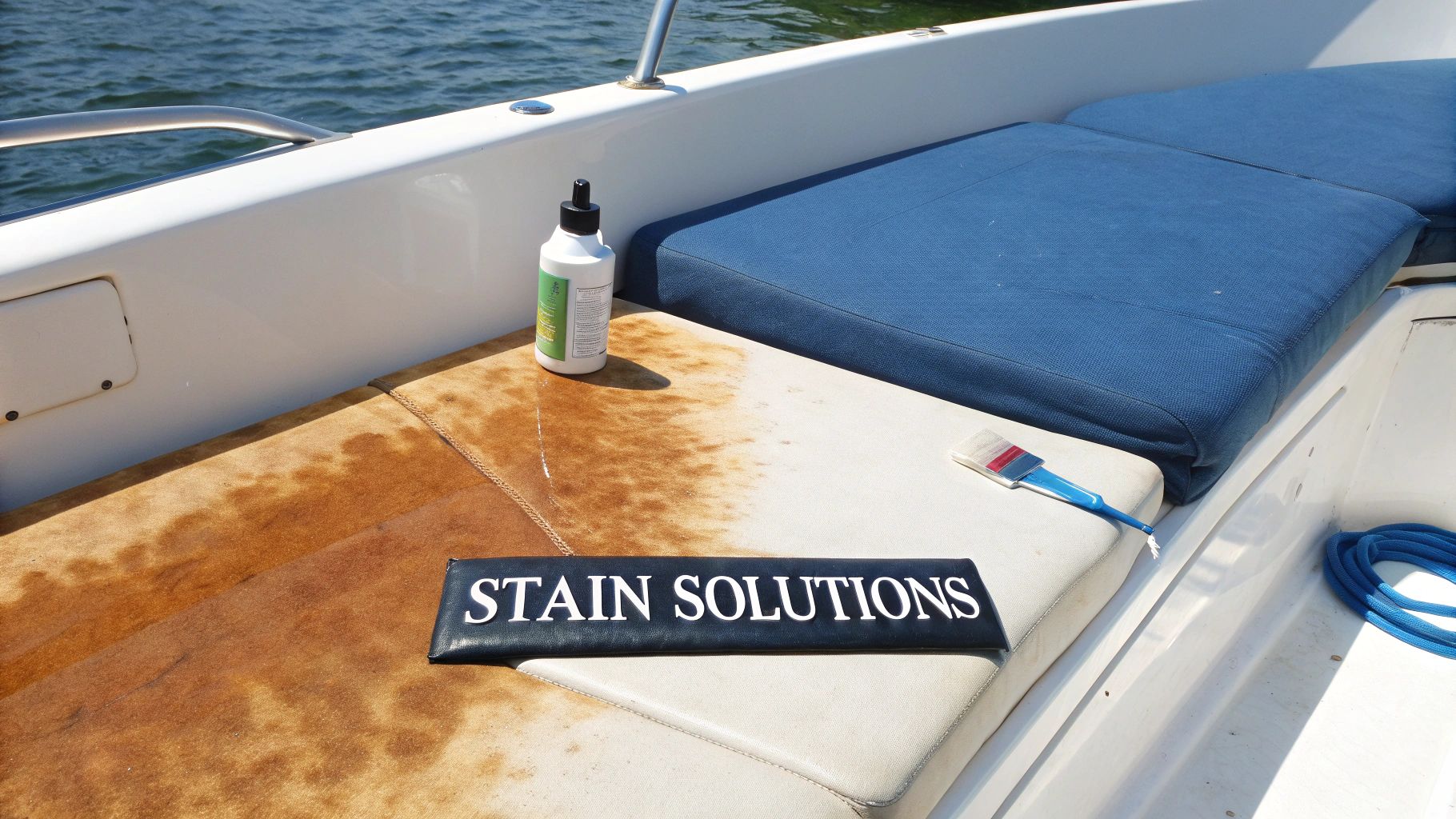
Sooner or later, every boat owner faces a stain that a simple wipe-down just won't touch. I’m talking about the deep-set mildew spots, the dreaded orange rust marks from snaps and hardware, or those ugly brown stains from wet leaves left sitting too long.
These problems call for a more strategic approach. Instead of grabbing the most potent cleaner you can find and hoping for the best, you need to match the solution to the specific stain. This isn't just about getting your seats clean; it’s about protecting your investment from permanent, costly damage.
Eradicating Stubborn Mildew
Those black or green spots are more than just an eyesore. They're living organisms that are literally eating away at your vinyl's protective coating and the fabric's fibers. Mildew absolutely loves the damp, dark environment under a boat cover, making it the perfect breeding ground.
Your first instinct might be to reach for bleach, but don’t do it. It's far too harsh for marine-grade upholstery and will make the material brittle, leading to cracks and tears down the road.
A much better strategy is to use a dedicated marine mildew remover. These are often enzymatic cleaners formulated to kill the mildew at its source without destroying your seats. Just apply the cleaner, let it work its magic for the time specified on the bottle, and then gently agitate the area with a soft brush to lift the stain.
Never use abrasive powders or a stiff-bristled brush on mildew. You’ll just scratch the vinyl’s surface, creating thousands of tiny new crevices where mildew can grow back even more aggressively.
Removing Rust and Organic Stains
Rust marks from hardware are a classic headache for boaters. They won’t budge with regular soap. The secret weapon here is a cleaner containing oxalic acid. It chemically reacts with and dissolves the rust particles, letting you simply wipe the stain away.
For organic messes—think bird droppings or those leaf stains I mentioned—an enzymatic cleaner is your best friend. The enzymes break down the proteins in the stain, dismantling it from the inside out. It's an incredibly effective method and much safer for your upholstery than harsh chemical alternatives.
After treating any tough stain, you have to rinse the area thoroughly with fresh water and let it dry completely. To get ahead of future problems, consider using a preventative product like a Star Brite Mildew Stain Blocker to add a protective barrier.
Keeping up with this isn't just about looks; it’s a major financial decision. The entire upholstery and carpet cleaning industry was valued at USD 55.16 billion in 2022 for a reason—the right methods can remove up to 98% of the contaminants that degrade marine fabrics. If you let it go, you could be looking at a reupholstery job costing anywhere from $5,000 to $20,000 for a typical cruiser.
Answering Your Top Boat Upholstery Questions
Even with the best intentions, a few questions always come up when you're trying to keep your boat's interior looking sharp. Let's tackle some of the most common ones I hear from fellow boat owners. Getting these right can save you a ton of time, money, and frustration down the road.
How Often Should I Really Clean My Boat Upholstery?
This isn't a one-size-fits-all answer. How you use your boat and where you keep it makes all the difference. A cruiser in the humid Florida Keys needs a different game plan than a ski boat on a freshwater lake in Michigan.
The best approach is to think in layers.
- After Every Single Trip: Give everything a quick wipe-down with a clean, damp microfiber cloth. This takes two minutes and stops salt, sunscreen, and daily grime from setting in. It's your best first line of defense.
- Monthly (During Peak Season): This is when you'll do a proper wash-down. Use a quality marine-grade, pH-neutral soap to get the deeper dirt out.
- Twice a Year: Plan for a deep clean at the start and end of your season. This is when you’ll tackle any stains, do a thorough scrub, and apply a fresh coat of UV protectant.
Sticking to a rhythm like this makes the job feel less overwhelming and prevents small spots from turning into permanent problems.
Are Household Cleaners Safe for Boat Seats?
I see this all the time, and it makes me cringe. It’s so tempting to just grab that bottle of all-purpose spray from under the kitchen sink, but please, never use household cleaners on your boat's vinyl or fabric.
Cleaners with bleach, ammonia, or harsh solvents are designed for hard, non-porous surfaces like tile and countertops. On marine upholstery, they absolutely destroy the protective topcoat that guards against sun damage. The vinyl will get brittle, start to crack, and you'll be calling an upholstery shop years sooner than you should have. Plus, that runoff is toxic to the marine environment you're out there to enjoy.
Stick to the script: Use pH-neutral, marine-specific cleaners. They're formulated to break down things like sunscreen, salt, and fish slime without stripping away essential protectants or harming aquatic life.
What Is the Best Way to Stop Mildew Before It Starts?
When it comes to mildew, an ounce of prevention is worth a ton of cure. Once those little black spots take root, getting them out completely is a real battle. The enemy here is simple: moisture.
Your number one weapon is ventilation. After a washdown or a heavy rain, get that boat opened up. Before you even think about snapping on the boat cover, you need to be 100% certain the seats are bone dry. Trapping even a little dampness under a dark cover is like rolling out the welcome mat for mildew.
If you can, open up hatches or use a small fan to keep the air moving. For damp cabins or storage lockers, those moisture-absorbing buckets and bags work wonders.
Can I Fix Faded Vinyl Seats?
Let's manage expectations here. If your seats have been baking in the sun for a decade, that severe color fade is permanent. The UV rays have literally cooked the pigment out of the material, and there's no cleaner that can reverse that.
But, you can often make a massive improvement. A lot of what looks like fading is actually a nasty combination of oxidation and ground-in grime that has dulled the finish.
Start with a really good deep cleaning. Then, follow it up with a high-quality marine vinyl conditioner. You'll be surprised how much color and luster it can bring back. More importantly, these protectants are loaded with UV blockers that will prevent any more fading, keeping your vinyl looking good for the seasons to come.
For all the marine-grade cleaners, protectants, and tools you need to keep your boat looking its best, MacombMarineParts.com has you covered. Explore our extensive catalog of maintenance supplies and find the perfect products for your boat today!
Created with Outrank