


The Ultimate 10-Point Boat Winterization Checklist for 2026
The Ultimate 10-Point Boat Winterization Checklist for 2026
As the boating season winds down, the most critical maintenance period begins. Proper winterization isn't just about preventing freeze damage; it's a comprehensive process that protects your engine, fuel system, hull, and electrical components from corrosion, degradation, and the harsh realities of off-season inactivity. Neglecting this crucial step can lead to catastrophic engine failure from a cracked block, fuel system clogs from degraded gasoline, and a frustratingly delayed start to the next season. A thorough pre-storage routine is the single most important investment you can make in your vessel's longevity and performance.
This definitive 10-point boat winterization checklist provides a system-by-system game plan to ensure your vessel weathers the cold with grace. We'll move beyond generic advice and dive into the specific, actionable steps required for a successful layup. You will learn the correct procedures for everything from changing your engine oil and stabilizing the fuel system to fogging the cylinders and protecting your sterndrive from galvanic corrosion. Each step is designed to be a clear, manageable task that collectively shields your boat from the damaging effects of moisture, freezing temperatures, and long-term disuse.
Following this guide methodically ensures a seamless transition from storage back to the water. For every part you need to complete the job, from OEM filters and spark plugs to specialized marine antifreeze and sacrificial anodes, we always recommend purchasing your marine parts and supplies from MacombMarineParts.com. Securing the right parts from a reliable supplier is the first step toward guaranteeing a trouble-free spring launch. Let's get started on protecting your investment for the months ahead.
1. Engine Oil and Filter Change
Kicking off your boat winterization checklist, the engine oil and filter change is arguably one of the most critical preventative tasks. During the boating season, engine oil accumulates moisture, acids, and other contaminants from combustion. Leaving this corrosive mixture in your engine over the winter invites rust and sludge formation on vital internal components like bearings and cylinder walls, leading to significant damage and costly repairs come springtime.
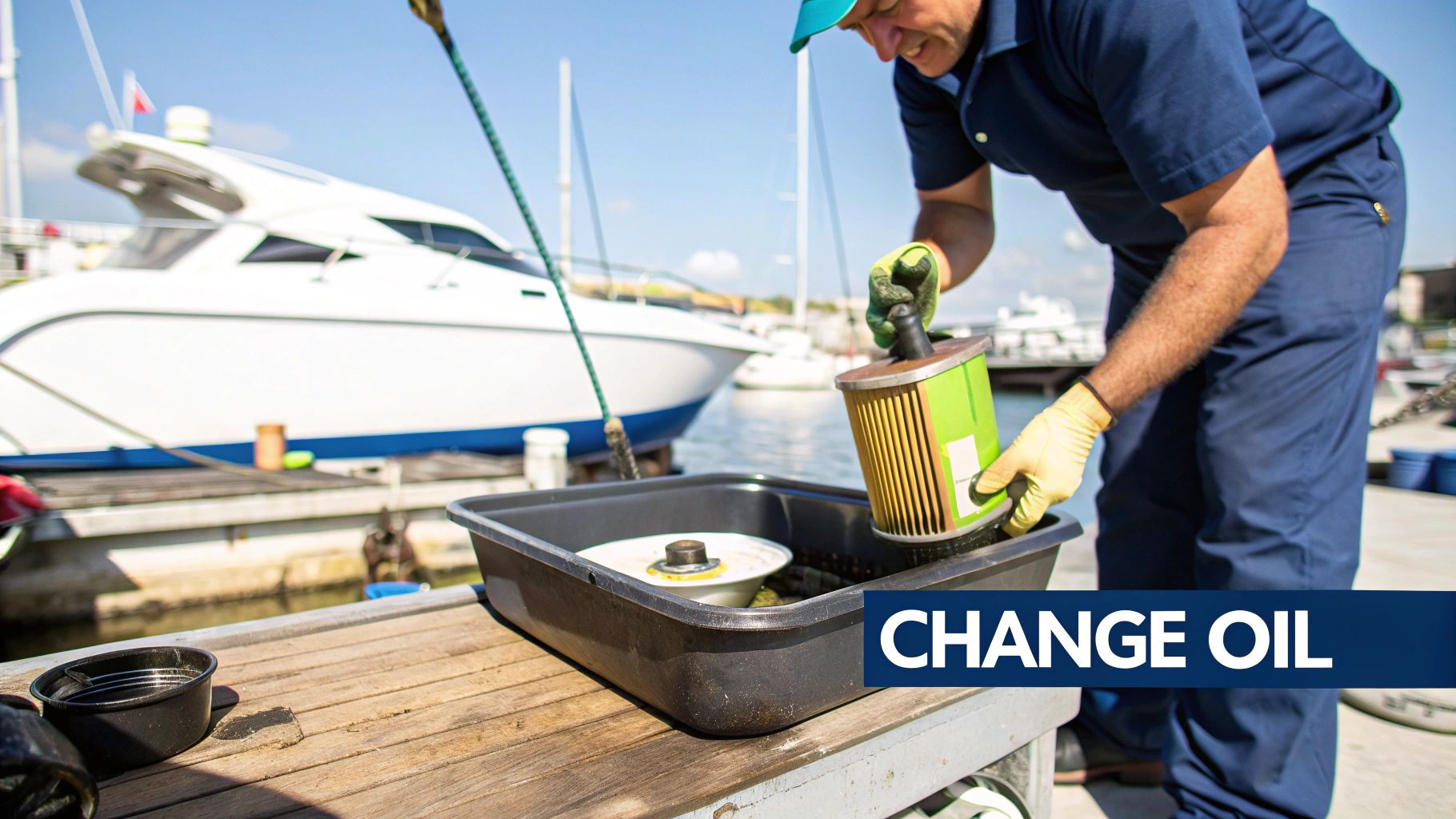
This task should be performed while the engine is still warm (around 40-50°C), but not scalding hot. Warm oil is less viscous, allowing it to drain more completely and carry more suspended contaminants out with it. Replacing the oil filter at the same time is non-negotiable; a used filter is saturated with the very impurities you're trying to remove.
Choosing the Right Oil and Filter
Using the correct marine-grade oil is essential for long-term engine health. Automotive oils lack the specialized additives needed to combat the harsh, high-moisture marine environment.
- Mercury Outboards: Typically require specific marine formulations like Quicksilver SAE 10W-30 or 25W-40.
- Volvo Penta Inboards: Perform best with oils meeting their VDS (Volvo Drain Specification) standard.
- Yamaha Outboards: Often benefit from synthetic blends for superior protection against cold-start wear.
Key Insight: Always consult your owner's manual for the exact OEM oil specification and viscosity grade. We always recommend purchasing OEM and high-quality aftermarket oils and filters from trusted brands like Sierra and Quicksilver at MacombMarineParts.com, ensuring you get the perfect match for your engine's requirements.
Actionable Tips for a Clean Oil Change
- Run the engine for 5-10 minutes to warm the oil before draining.
- Always replace the oil filter gasket and apply a light film of new oil to it before installation.
- Use an oil extractor pump for cleaner and easier removal, especially on inboard and sterndrive engines. You can find quality marine pumps at MacombMarineParts.com.
- Document the date and oil type used in your maintenance log for future reference.
- Properly dispose of used oil and filters at an authorized recycling facility.
2. Fuel Stabilization and Tank Treatment
Next on your comprehensive boat winterization checklist is treating your fuel system. Modern gasoline, especially ethanol-blended fuel, can begin to degrade in as little as 30-60 days. Left untreated over winter, it oxidizes and forms gummy varnish deposits that can clog carburetors, fuel injectors, and filters. This leads to poor engine performance, hard starting, and potentially expensive fuel system repairs in the spring.
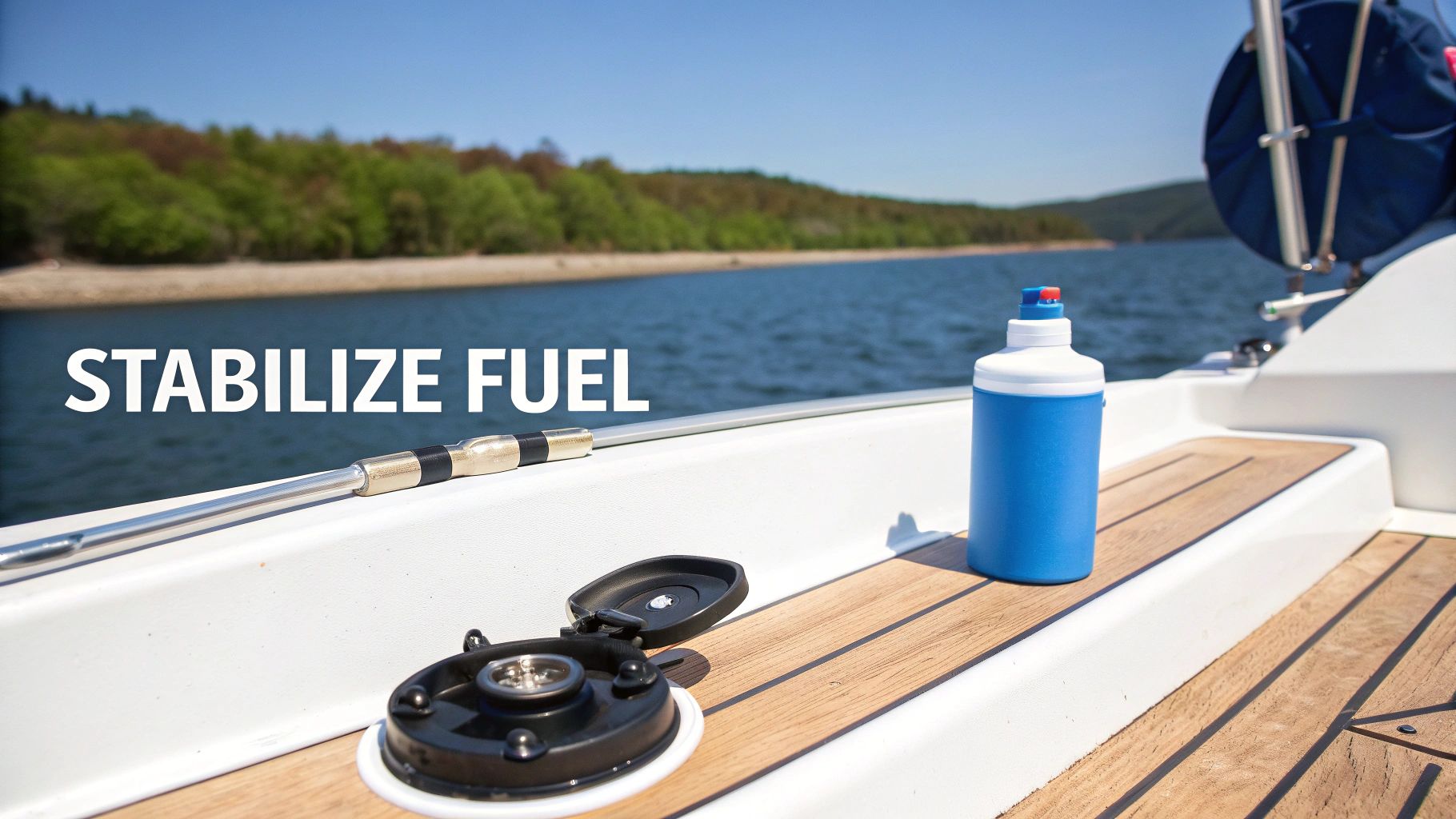
Fuel stabilization is a simple preventative measure that extends the life of your gasoline for 12 months or more. It works by preventing oxidation and phase separation, where water and ethanol separate from the gasoline, creating a corrosive mixture at the bottom of your tank. This step is non-negotiable for ensuring your boat is ready to go when the next season begins.
Choosing the Right Fuel Treatment
Using a high-quality marine-specific fuel stabilizer is crucial, as they are formulated to handle the unique challenges of the marine environment, including high humidity and potential water intrusion.
- Mercury Engines: Quicksilver Quickstor Fuel Stabilizer is the factory-recommended product, designed to prevent fuel breakdown and corrosion in all grades of gasoline.
- Yamaha Engines: Yamaha recommends its own brand of Yamalube Fuel Stabilizer & Conditioner, which is specifically formulated for their high-performance outboards.
- BRP (Evinrude/Johnson): BRP Storage Fogging Oil often contains stabilizing agents to protect the fuel system during layup.
Key Insight: The correct fuel treatment not only stabilizes fuel but also contains detergents and corrosion inhibitors to keep the entire fuel system clean and protected. To ensure you have the best protection, we always recommend purchasing from the full line of OEM and premium aftermarket fuel stabilizers at MacombMarineParts.com.
Actionable Tips for Fuel System Storage
- Add the stabilizer to your tank before the final fill-up to ensure thorough mixing as you add the fuel.
- Fill your fuel tank to approximately 95% capacity. This minimizes air space, reducing the potential for condensation to form inside the tank.
- Run the engine for 10-15 minutes after adding the treated fuel. This circulates the stabilized mixture through the entire system, including fuel lines, pumps, and injectors or carburetors.
- Check your product's instructions for the correct dosage, typically around 1 ounce of stabilizer for every 5 gallons of fuel.
- For engines with carburetors, it's a good practice to drain the carburetor bowls after running the treated fuel through to prevent any residual fuel from gumming up the small passages.
3. Coolant Flush and Antifreeze System Check
Protecting your engine from the devastating effects of freezing temperatures is a cornerstone of any thorough boat winterization checklist. Whether your vessel has a closed-loop system or is raw-water cooled, properly addressing the cooling system is essential. Trapped water can freeze, expand, and crack expensive components like the engine block, manifold, or heat exchanger, leading to catastrophic failure and eye-watering repair bills in the spring.
This process involves draining the existing coolant or raw water and refilling the system with a non-toxic marine-grade antifreeze. This not only prevents freeze damage but also circulates corrosion inhibitors throughout the water jackets and passages, safeguarding internal metals from rust and electrolysis during the long layup period. For raw-water cooled engines, this is often called "fogging" the cooling system.
Choosing the Right Marine Antifreeze
Using the correct type and concentration of antifreeze is critical; standard automotive antifreeze is toxic and illegal to discharge in waterways. Marine antifreeze is propylene glycol-based, making it safer for the environment.
- Volvo Penta: Specifies their proprietary yellow or green coolants for optimal corrosion protection in their closed-loop systems.
- Mercury/Quicksilver: Offers specific propylene glycol formulas rated for different temperature thresholds, typically -50°F or -100°F.
- Crusader Engines: Often require a specific marine equivalent to Zerex G-05 for their closed cooling circuits to prevent seal and gasket degradation.
Key Insight: Always use a non-toxic, propylene glycol-based marine antifreeze. We always recommend purchasing from the complete range of OEM and high-quality Sierra marine antifreeze at MacombMarineParts.com to ensure you get the exact freeze protection and corrosion-inhibiting formula required for your specific engine model.
Actionable Tips for a Secure Cooling System
- For closed-loop systems, use a hydrometer to test the current antifreeze; replace it if it doesn't offer protection below your region's lowest expected temperature.
- For raw-water cooled engines, use a winterizing kit or a 5-gallon bucket to run the antifreeze mixture through the engine until you see it exit the exhaust.
- Always inspect and clean raw water strainers before running antifreeze through the system.
- Check and replace sacrificial zinc anodes within the heat exchanger or engine block as needed. Find the correct anodes for your engine at MacombMarineParts.com.
- After filling, briefly run the engine to circulate the new antifreeze and ensure there are no air pockets.
4. Spark Plug Inspection and Replacement
An often-overlooked but vital step in your boat winterization checklist is inspecting and replacing the spark plugs. Winter storage is the perfect time for this task, as fouled, worn, or corroded plugs can lead to hard starting, poor fuel economy, and rough idling when you launch your boat in the spring. Addressing this before the engine sits dormant for months ensures reliable ignition and prevents frustrating startup issues after winter inactivity.
The condition of your old spark plugs provides a valuable diagnostic window into your engine's health. For example, black, sooty deposits might indicate a rich fuel mixture, while oily fouling could point to issues with piston rings or valve seals. By "reading" the plugs, you can identify potential problems that might need attention before the next season.
Choosing the Right Spark Plugs
Using the exact spark plug specified by your engine manufacturer is critical for performance and reliability. Plugs are designed with specific heat ranges and electrode materials to match an engine's combustion characteristics.
- Mercury Verado Engines: Require specific NGK spark plugs gapped to precise tolerances to ensure optimal supercharged performance.
- Yamaha Four-Stroke Outboards: Often mandate manufacturer-approved plugs like those from NGK to maintain warranty coverage and peak efficiency.
- Volvo Penta Inboards: Commonly use Champion or Bosch plugs that meet the engine's specific operational requirements.
Key Insight: Installing the wrong spark plug can lead to engine damage, detonation, and poor performance. Always cross-reference your engine model with the owner's manual. We always recommend purchasing from the comprehensive inventory of OEM and high-quality aftermarket plugs from NGK, Champion, and Sierra at MacombMarineParts.com to guarantee a perfect fit.
Actionable Tips for Spark Plug Service
- Before removing old plugs, clean the area around them with compressed air to prevent debris from falling into the cylinders.
- Gap new plugs to the manufacturer's specification (typically 0.028-0.035 inches) using a proper gapping tool.
- Apply a small amount of anti-seize compound to the plug threads, especially in aluminum heads, to prevent galling.
- Tighten plugs with a torque wrench to the value specified in your service manual to avoid over-tightening.
- Replace all plugs as a set; never mix old and new plugs as this can cause an imbalanced engine operation.
5. Battery Disconnect and Storage Preparation
A common springtime frustration is discovering a dead battery, a problem easily avoided with proper attention during your boat winterization checklist. Over the winter, even when switched off, your boat's batteries can slowly discharge due to parasitic drains from components like bilge pump float switches, stereo memory, and GPS receivers. A completely discharged lead-acid battery can suffer permanent damage from sulfation, drastically reducing its capacity and lifespan, and leaving you with a costly replacement bill before you even hit the water.
Preparing your batteries for the off-season is a simple task that protects one of your boat's most critical electrical components. The goal is to isolate the battery from any potential drain and maintain its charge at a healthy level throughout storage. This ensures strong cranking power on the first day of the next season and maximizes the battery's service life, saving you significant money over time.
Choosing the Right Storage Method
The best approach depends on your storage situation. If storing your boat where you have access to power, a smart battery maintainer is the ideal solution. These devices monitor the battery's voltage and apply a slow, steady charge only when needed, preventing overcharging.
- For Lead-Acid/AGM Batteries: Smart chargers like those from NOCO or Battery Tender by Deltran prevent sulfation and maintain optimal charge.
- For Lithium (LiFePO4) Batteries: It is critical to use a lithium-specific charger or tender, as standard chargers can damage them.
- No Power Access: If storing without power, fully charge the batteries, disconnect them completely, and if possible, remove them and store in a cool, dry place off concrete floors.
Key Insight: A smart battery maintainer is one of the best investments for your boat. We always recommend purchasing from the selection of marine-grade battery chargers and tenders from trusted brands like NOCO at MacombMarineParts.com, ensuring your power source is protected all winter long and ready for spring launch.
Actionable Tips for Battery Preservation
- Always disconnect the negative (black) terminal first, then the positive (red) terminal to prevent accidental short-circuiting.
- Clean any corrosion from the terminals and cable ends with a wire brush and a paste of baking soda and water.
- After cleaning and drying, apply a thin coat of dielectric grease to terminals to prevent future corrosion.
- If removing the batteries, store them in a cool, dry location away from direct sunlight and potential ignition sources.
- For traditional lead-acid batteries, check the specific gravity or voltage monthly to ensure they maintain a sufficient charge.
6. Raw Water Intake System Flushing and Protection
A crucial step in any boat winterization checklist is protecting the raw water cooling system. This system draws water directly from the lake or ocean, bringing in salt, minerals, and biological matter. If left untreated over winter, this water can freeze and crack engine blocks, manifolds, or heat exchangers. It can also cause severe corrosion and sediment buildup, leading to overheating and costly failures next season.
The goal is to completely displace the raw water with either air (by draining) or a suitable antifreeze solution. This prevents freeze damage and coats the internal passages, including the vital water pump impeller, with a protective film that inhibits rust and corrosion throughout the long storage period.
Flushing and Filling for Maximum Protection
Properly flushing the system with fresh water before introducing antifreeze is non-negotiable, especially for boats operated in salt water. This initial flush removes lingering salt crystals and debris that can reduce the effectiveness of the antifreeze.
- Sterndrives & Inboards: Use an engine flusher kit that allows you to draw a freshwater and antifreeze solution from a bucket directly into the engine's raw water intake.
- Outboards: Utilize flushing muffs (also known as "ear muffs") that fit over the water intakes on the lower unit, allowing you to run the engine on a garden hose.
- Saltwater Boats: A thorough 15-minute freshwater flush is recommended after every use, with a final, more comprehensive flush during winterization to prevent hidden salt deposits from causing damage.
Key Insight: Always use a non-toxic propylene glycol antifreeze specifically designed for marine engines. Automotive ethylene glycol is highly toxic to aquatic life and can damage gaskets and seals in your cooling system. We always recommend purchasing your marine-grade antifreeze from leading brands at MacombMarineParts.com to ensure your engine is properly protected.
Actionable Tips for Raw Water Systems
- Run the engine until it reaches normal operating temperature to ensure the thermostat opens, allowing the flush and antifreeze to circulate throughout the entire system.
- While flushing, inspect the raw water intake strainer and clean out any accumulated debris.
- This is the perfect time to inspect and potentially replace your water pump impeller, a critical wear item you can always find at MacombMarineParts.com.
- For sterndrives, remove the outdrive drain plugs to ensure all water has been evacuated before filling with antifreeze.
- Always check your engine's service manual for specific draining points and winterization procedures, as they can vary significantly between models.
7. Fogging Oil Application and Fuel System Treatment
Protecting your engine's internal components from moisture during the long, damp winter layup is a non-negotiable step in any comprehensive boat winterization checklist. Fogging oil is a light, wax-based aerosol oil that coats vital internal surfaces like cylinder walls, piston rings, and intake valves. This protective barrier prevents rust and corrosion from forming as condensation builds up inside the engine during temperature fluctuations, ensuring a smooth, damage-free start in the spring.
This process is especially critical for two-stroke outboards but is also recommended for most carbureted and electronically fuel-injected (EFI) inboard and sterndrive engines. While stabilizing the fuel protects the fuel system, fogging oil is what directly shields the combustion chamber and rotating assembly from the corrosive effects of a humid storage environment.
Choosing the Right Fogging Oil
Using a high-quality, marine-specific fogging oil is essential for proper protection without leaving harmful deposits. Automotive-grade oils are not formulated to handle the unique challenges of a marine engine's storage environment.
- Two-Stroke Outboards: Engines from Johnson, Evinrude, and older Mercury models heavily rely on fogging for internal preservation.
- Four-Stroke Engines: Many manufacturers, including Mercury for their Verado line, specify fogging as part of the official winterization procedure.
- Inboard Engines: Volvo Penta and MerCruiser owners report significantly fewer corrosion-related startup issues when fogging is performed correctly.
Key Insight: Always check your owner's manual to confirm the fogging procedure for your specific engine model. We always recommend purchasing OEM-approved fogging oils from Quicksilver and Yamaha, as well as trusted aftermarket options from Sierra, at MacombMarineParts.com to guarantee your engine gets the best protection available.
Actionable Tips for Effective Fogging
- With the engine running, spray the fogging oil directly into the carburetor or throttle body air intake until the engine begins to stall and produce smoke.
- For a more thorough application, you can also remove the spark plugs and spray a few seconds of fogging oil into each cylinder.
- After spraying into the cylinders, briefly turn the engine over by hand (with the kill switch off) to ensure the oil is evenly distributed on the cylinder walls.
- Reinstall the spark plugs loosely to prevent moisture from entering but allow any excess fumes to vent. Do not start the engine after fogging.
- For engines with complex fuel systems, ensuring the entire system is protected is key. You can find any replacement fuel system parts you need at MacombMarineParts.com.
8. Transmission and Sterndrive Fluid Change
Often overlooked in a boat winterization checklist, changing the transmission and sterndrive fluid is crucial for protecting the intricate gearing of your propulsion system. Over a season, this fluid accumulates moisture through condensation and microscopic metal particles from normal gear wear. Leaving this contaminated fluid in the drive over the winter can lead to corrosion, etching on gear surfaces, and premature bearing failure.
This task is essential for both inboard transmissions and inboard/outboard (I/O) sterndrives. Draining the old, contaminated lubricant and refilling with fresh, manufacturer-specified fluid coats all internal components, displacing water and providing a protective barrier against the humid, stagnant conditions of winter storage. This simple step ensures smooth, reliable shifting and extends the life of your expensive drive components.
Choosing the Correct Drive Lubricant
Using the right fluid is not optional; it's a requirement for performance and warranty compliance. Automotive fluids are not formulated to handle the high-load, high-moisture environment of a marine drive.
- Volvo Penta Drives: Newer IPS and DPS drives demand specific synthetic gear oils that meet Volvo Penta's stringent specifications.
- Mercury MerCruiser Sterndrives: Require Quicksilver High Performance Gear Lube or a product meeting the specific OEM standard for that drive model.
- Outboard Lower Units: Also require a gear lube change, a process we detail in our complete guide to an outboard lower unit oil change.
Key Insight: Your owner’s manual is the definitive source for the correct fluid type and viscosity. We always recommend purchasing genuine OEM and premium aftermarket gear lubes from Quicksilver, Volvo Penta, and Sierra at MacombMarineParts.com, removing any guesswork and guaranteeing you have the exact product for your drive system.
Actionable Tips for a Flawless Fluid Change
- Run the boat (on the water or with a proper water supply) for a few minutes to warm the fluid, which helps it drain completely.
- Always inspect the drained fluid on a white paper towel. A milky appearance indicates water intrusion, while excessive metal shavings signal significant internal wear that needs professional diagnosis.
- Always replace the drain and vent plug gaskets to ensure a watertight seal.
- Use a gear lube pump to fill the drive from the bottom drain hole until fluid flows out of the top vent hole. This method prevents air pockets.
- Keep a detailed record of the date and the specific type of lubricant used in your boat's maintenance log.
9. Hull, Through-Hull, Propeller and Drive Protection (Zincs, Corrosion Control, and Propeller Care)
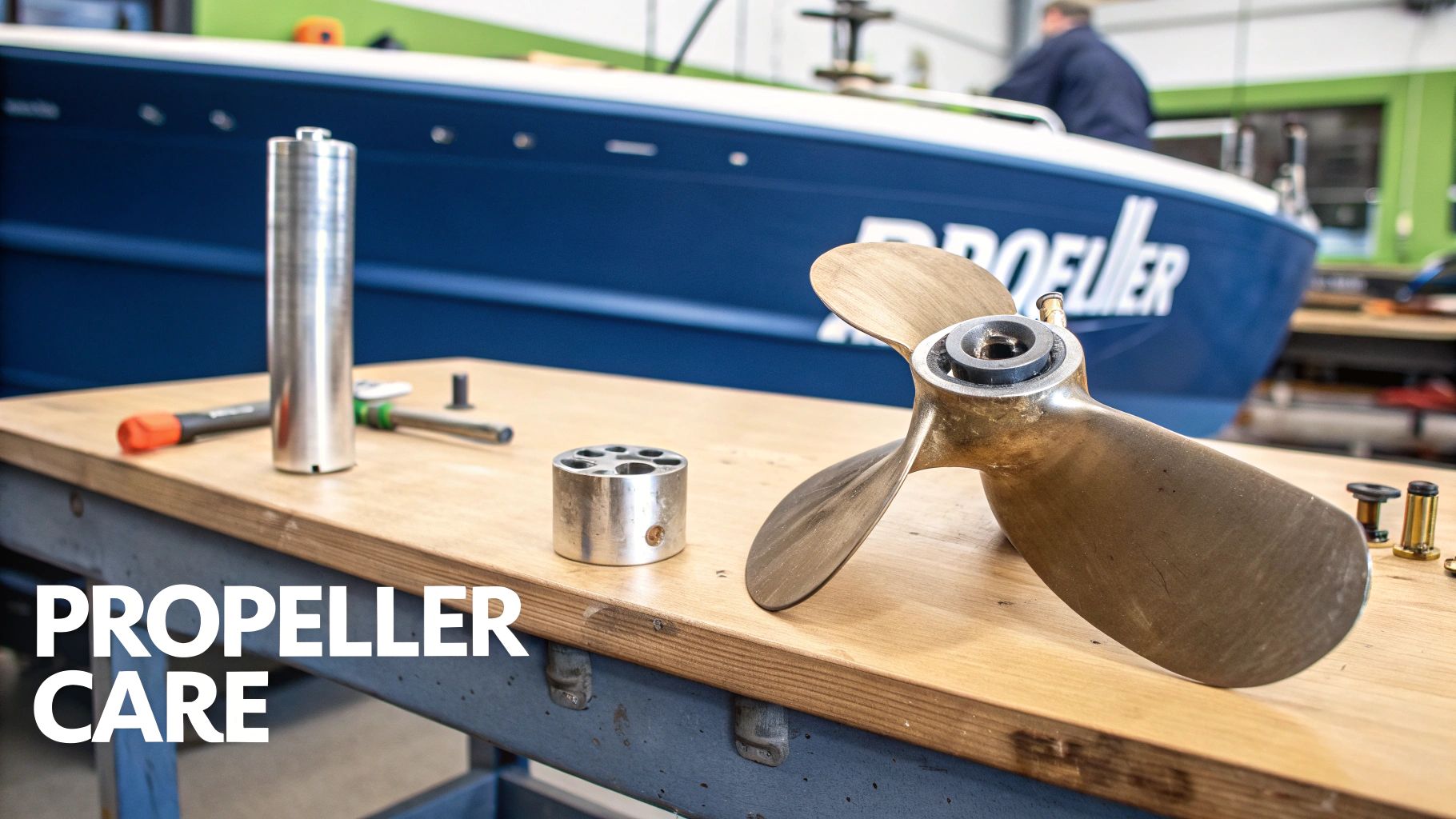
A crucial but often overlooked step in any comprehensive boat winterization checklist is protecting your underwater metals from galvanic corrosion. Zinc anodes sacrificially corrode to spare vital components like propellers, shafts, trim tabs, and through-hulls. Winter storage presents the perfect opportunity to inspect these anodes, replace depleted ones, and perform essential propeller care to prevent costly damage over the layup period.
Removing the propeller for the winter is a best practice that prevents corrosion, biological growth, and potential impact damage to the prop or shaft. It also allows for a thorough inspection of the propeller hub, blades, and shaft seals for leaks or other issues that can be addressed during the off-season, ensuring you're ready to launch without delay in the spring.
Choosing the Right Anodes and Prop Care
Using the correct marine-grade sacrificial anodes is critical for effective protection. Different water conditions (salt, brackish, or fresh) require different anode materials (zinc, aluminum, or magnesium).
- Volvo Penta Drives: These units often come with comprehensive factory zinc packages that are designed for annual replacement to maintain warranty and protection.
- Mercury/Quicksilver Props: Many propellers are shielded by factory-installed zinc cups or anodes on the sterndrive that deplete, especially in saltwater.
- SEI Sterndrive Units: These aftermarket drives ship with complete anode kits that must be maintained for proper corrosion control.
- Turning Point Propellers: While protected with factory epoxy coatings, they may require re-coating for heavy saltwater use.
Key Insight: Never paint over your anodes or use a wire wheel aggressively on them, as this can passivate the surface and render them ineffective. We always recommend purchasing the exact OEM and high-quality aftermarket anode kits for your drive system from top brands at MacombMarineParts.com to ensure a perfect fit and reliable protection.
Actionable Tips for Underwater Metal Protection
- Inspect all anodes before winter storage; replace any that are 50% depleted or more.
- Ensure anodes make clean, direct metal-to-metal contact to function correctly.
- Use a proper propeller puller tool to avoid damaging the propeller or shaft; never use a hammer.
- After removing the prop, clean it thoroughly and inspect for dings, cracks, or erosion. Consider getting it reconditioned if damage is found. Our boat propeller size chart can help you find a replacement if needed.
- Lightly grease the propeller shaft with marine-grade grease before storing the prop separately in a safe, dry location.
- Inspect the propeller shaft seals for any signs of fishing line entanglement or oil leakage.
10. Drain and Winterize Bilge and Fresh Water Systems
An often-overlooked yet critical part of any boat winterization checklist is addressing the bilge and all onboard fresh water systems. Any water left in pumps, lines, tanks, or through-hull fittings will freeze and expand, leading to cracked housings, split hoses, and damaged seacocks. The result is often a flooded boat and an extremely expensive repair bill when the spring thaw arrives.
This process involves meticulously draining every system that holds water, from the bilge sump to faucets and showerheads. Proper winterization ensures that your boat's plumbing and essential systems are protected from the destructive force of ice. Forgetting this step is one of the most common and costly winter storage mistakes a boat owner can make.
Securing Your Onboard Water Systems
The goal is to remove every drop of water or replace it with a non-toxic propylene glycol antifreeze suitable for potable water systems. This protects not only the plumbing but also the pumps and fixtures connected to it, preventing corrosion and bacterial growth over the long storage period.
- Bilge Systems: Water often gets trapped in the bilge pump housing and discharge lines.
- Fresh Water Systems: Includes the water tank, pump, water heater, faucets, and shower lines.
- Waste Systems (Heads): Involves draining the holding tank and winterizing the toilet pump and associated plumbing.
- Raw Water Washdowns: These systems also need to be fully drained and protected.
Key Insight: Simply draining systems is not enough; residual water will remain in low points and inside pumps. You must either blow the lines out with compressed air or, more commonly, run non-toxic antifreeze through the entire system until it comes out of every faucet and fixture. For bilge pumps and other raw water components, a marine-grade ethylene glycol antifreeze is appropriate. Always purchase your marine antifreeze and plumbing supplies at MacombMarineParts.com.
Actionable Tips for Complete System Protection
- Start by pumping the fresh water and waste holding tanks completely empty at a designated facility.
- Open all faucets, showers, and spigots, then use the boat's water pump to drain the fresh water tank until it runs dry. Don't forget to drain the water heater, following the manufacturer's instructions.
- For the bilge, use a sponge to get the last bit of water out of the sump after the pump runs dry.
- Circulate a non-toxic, propylene glycol antifreeze through the fresh water system until you see the distinct pink or blue color run from every fixture (hot and cold).
- Pour a small amount of antifreeze directly into the bilge to protect the pump and into shower sumps and sink drains to protect the P-traps.
- Inspect all seacocks and through-hull fittings for corrosion or leaks. If you find a compromised component, we always recommend purchasing replacements like the durable options from Groco available at MacombMarineParts.com.
10-Item Boat Winterization Comparison
| Task | Implementation Complexity 🔄 | Resource Requirements ⚡ | Expected Outcomes ⭐ | Results / Impact 📊 | Ideal Use Cases & Tips 💡 |
|---|---|---|---|---|---|
| Engine Oil and Filter Change | Low — straightforward DIY procedure | Basic hand tools, correct oil & filter, disposal facility | ⭐⭐⭐ — excellent engine corrosion & wear protection | Prevents rust, sludge, and hard spring starts | Warm engine to 40–50°C, replace filter, record service |
| Fuel Stabilization and Tank Treatment | Very low — simple additive procedure | Fuel stabilizer, fuel cap access, occasional fuel polishing for large tanks | ⭐⭐ — strong fuel-life extension when mixed correctly | Reduces varnish, injector/carburetor blockages | Add before filling, run engine 10–15 min to circulate |
| Coolant Flush and Antifreeze System Check | Medium — some disassembly and testing | Marine antifreeze, flushing equipment, hydrometer, proper disposal | ⭐⭐⭐ — critical for freeze protection and corrosion control | Prevents cracked blocks, preserves heat exchangers/pumps | Use marine propylene glycol, bleed air, test concentration |
| Spark Plug Inspection and Replacement | Low — simple but may have access challenges | Correct plugs, gap tool, basic hand tools, anti-seize | ⭐⭐ — improves starting reliability and combustion health | Reduces misfires and spring starting issues | Replace all plugs, gap per OEM, label positions |
| Battery Disconnect and Storage Preparation | Low — quick procedure with safety steps | Basic tools, smart battery tender/maintainer, storage space | ⭐⭐⭐ — excellent for preserving battery life and cranking power | Prevents sulfation, frozen cells, and unexpected dead batteries | Disconnect negative first, use smart tender, clean terminals |
| Raw Water Intake System Flushing and Protection | Medium — requires running & access to through-hull fittings | Fresh water source or flushing muff, antifreeze for freezing climates | ⭐⭐⭐ — high protection against corrosion, blockages, freeze damage | Extends impeller, pump and heat exchanger life; prevents clogs | Flush 10–15 min, install flushing connector, replace impeller if worn |
| Fogging Oil Application and Fuel System Treatment | Medium — needs spark plug removal and careful application | Fogging oil, basic tools, ventilation; follow OEM product | ⭐⭐⭐ — very effective at preventing internal corrosion (esp. 2-stroke) | Protects cylinder walls, rings and internal metal surfaces | Remove plugs, spray until light smoke, do not start engine afterward |
| Transmission and Sterndrive Fluid Change | Medium — some lifts or access equipment required | Correct fluid per OEM, disposal, possible filters and tools | ⭐⭐⭐ — strong protection for gears, bearings and seals | Prevents transmission failure and improves shifting performance | Warm unit before drain, inspect fluid for metal shavings |
| Hull, Through-Hull, Propeller & Drive Protection (Zincs) | Medium — inspection and possible prop removal | Zinc anodes, prop puller, cleaning supplies, coatings | ⭐⭐⭐ — essential for galvanic corrosion prevention in saltwater | Extends life of props, shafts, fittings and prevents costly repairs | Replace anodes <50% left, photograph prop position, torque per spec |
| Drain & Winterize Bilge and Fresh Water Systems | Medium — multiple access points and careful draining | Compressor or pump, non-toxic antifreeze (propylene), hand tools | ⭐⭐ — highly effective at preventing freeze damage and bacterial growth | Prevents pump/seacock failure, mold, and burst lines | Blow out lines with low PSI, run antifreeze through fixtures, inspect seacocks |
Your Partner for a Perfect Spring Launch
Navigating through this comprehensive boat winterization checklist may seem like a significant undertaking, but it represents the most critical investment you can make in your vessel's future. Each step, from the precise oil change to the final hull inspection, is a deliberate action against the harsh realities of off-season storage. You aren't just putting your boat to bed for the winter; you are proactively engineering a seamless and successful spring launch.
This process is a testament to the old adage: an ounce of prevention is worth a pound of cure. A cracked engine block from a poorly drained cooling system or a corroded fuel injector from unstabilized ethanol-blended fuel can lead to thousands of dollars in repairs and weeks of lost time on the water. By diligently following this guide, you transform potential disasters into non-issues, ensuring your boat emerges from its winter slumber in peak condition.
Key Takeaways for Long-Term Vessel Health
The core principle of effective winterization is moisture and corrosion elimination. Every system on your boat is vulnerable.
- Fluid Management is Non-Negotiable: Old engine oil contains acidic contaminants that corrode internal components. Untreated fuel degrades, varnishes, and absorbs water. Draining and replacing these fluids isn't just a maintenance task; it's a defensive strategy against internal decay.
- Water is the Enemy: Whether it's in the engine block, raw water lines, or freshwater tanks, trapped water that freezes will expand with immense force. Thoroughly draining every system and backfilling with the correct marine-grade antifreeze, like the Sierra Antifreeze available at MacombMarineParts.com, is the only way to guarantee protection.
- Electrical Systems Need Isolation: Batteries left connected can slowly discharge, suffer from sulfation, and ultimately fail. A disconnected, clean, and properly stored battery will greet you in the spring with reliable starting power, saving you from the frustration and expense of a premature replacement.
From Checklist to Action: Your Next Steps
Completing your boat winterization checklist is more than just a seasonal chore; it’s a discipline that pays dividends. It builds your confidence as an owner and deepens your understanding of your vessel's intricate systems. The value lies not just in the tasks completed but in the peace of mind that comes from knowing the job was done right, using high-quality components.
When spring arrives and the first warm day beckons, the last thing you want is to be troubleshooting a winter-related failure. You want to be turning the key, hearing the engine roar to life, and casting off the lines. The meticulous effort you invest now is your ticket to that very moment. It's the difference between a season that starts in the repair shop and one that starts on the water, making memories.
Pro Tip: Create a personal logbook for your winterization process. Note the date, the specific products used (e.g., Sta-Bil 360 Marine Fuel Stabilizer, Quicksilver 25W-40 Synthetic Blend Oil), and any anomalies you discovered. This record will become an invaluable resource for future seasons and can significantly increase your boat's resale value.
By approaching winterization with a systematic plan and the right supplies, you are not merely preserving your boat; you are honoring your investment and ensuring its readiness for countless adventures ahead.
Don't let a missing part derail your project. MacombMarineParts.com provides everything you need to complete your boat winterization checklist, from OEM-specific filters and anodes to top-tier aftermarket fluids and fogging oils. We always recommend using their intuitive parts diagrams to find the exact component for your engine and get it delivered fast, so you can finish the job with confidence.