


The Ultimate Volvo Penta Parts Diagram Reference Guide
A Volvo Penta parts diagram is more than just a technical schematic; it's an exploded view of your engine or drive system that's absolutely essential for getting repairs and maintenance right. For any boat owner or mechanic, getting comfortable with these diagrams is the first real step to servicing your own equipment successfully.
Why a Volvo Penta Parts Diagram Is Essential
Trying to navigate a marine engine repair without a proper diagram is a recipe for frustration. You're left guessing which seal, bearing, or filter you actually need, which almost always leads to ordering the wrong items. That means costly project delays and, even worse, potential damage to your engine. Using an accurate schematic ensures you get the right component the first time, every time.
This guide will give you a complete framework for finding, reading, and actually using these documents. We’ll show you how to locate your engine's model number, make sense of the callouts on the diagram, and cross-reference part numbers to buy with confidence. When it's time to source your components, you should always head over to MacombMarineParts.com, which has an extensive online catalog and easy-to-use lookup tools for both OEM and high-quality aftermarket parts.
The Foundation of Efficient Marine Service
You just can't overstate how important accessible, accurate diagrams are in the marine world. Volvo Penta is a major player in the marine sterndrive market, which sees over 120,000 unit sales every year in North America alone. The move from dusty paper manuals to digital databases has completely changed how mechanics work, with many spending 2-3 hours per job just consulting diagrams. Having quick online access is a massive time-saver. You can learn more about the evolution of marine parts systems and their impact.
Properly identifying a single part using a diagram can be the difference between a quick, one-hour fix and a boat being out of commission for weeks. It’s the single most critical step in the repair process.
To get started, you have to know what you're working on. That means correctly identifying your engine or drive family, and the model prefix is the key.
Quick Guide to Common Volvo Penta Model Prefixes
This table is a quick cheat sheet. Use it to get a general idea of your Volvo Penta engine or sterndrive family just by looking at the first few letters in your model number.
| Model Prefix | Engine/Drive Family | Common Applications |
|---|---|---|
| SX, DPS, DP | Sterndrive (Outdrive) | Found on a wide range of recreational boats. |
| D Series (e.g., D4, D6) | Diesel Engines | Used in both recreational and commercial vessels. |
| V6, V8 (e.g., 4.3, 5.7) | Gasoline Engines | Common in sterndrive and inboard powerboats. |
| IPS Series | Pod Drive System | Popular in modern yachts and sport cruisers. |
Once you've got a handle on the general family, you can start digging into the specific diagrams for your model.
How to Read and Understand Volvo Penta Diagrams
Staring at a Volvo Penta parts diagram for the first time can feel a little intimidating, but there's a simple logic to it. Think of it like a map: the drawing shows you where everything goes, and the parts list is the legend that tells you what's what. Once you get the hang of it, you'll be able to pinpoint the exact part you need in minutes.
The main drawing is usually an "exploded view," which is a fancy way of saying it shows how all the individual components of a larger assembly fit together. Every single bolt, gasket, and housing is assigned its own unique callout number (sometimes called a reference number). That number is the key to everything.
This simple process is your roadmap from figuring out your engine model to getting the right part delivered to your door.
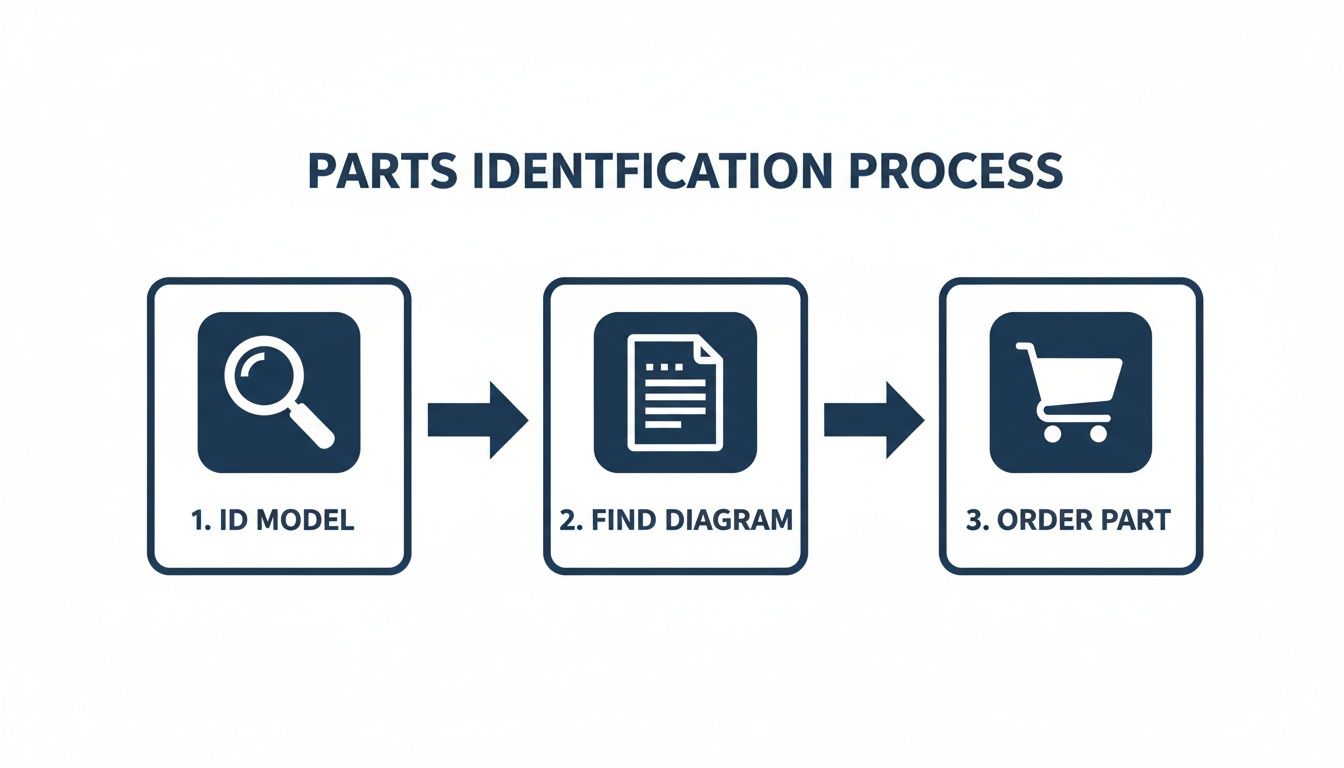
As you can see, a successful repair always starts with accurately identifying the part straight from the schematic. Get that part number, and the rest is easy.
Connecting Callouts to Part Numbers
Find the component you need in the exploded view and make a note of its callout number. Now, look for that same number in the parts list, which is almost always right next to or just below the illustration. This is where you'll find the nitty-gritty details for ordering.
The parts list breaks down the information into a few critical columns for each callout number:
- Part Number: This is the official Volvo Penta ID number. It's the most important piece of information you need for ordering.
- Description: A straightforward name for the part (e.g., "Seal Ring," "Impeller," "Hose Clamp").
- Quantity (QTY): This tells you exactly how many of that part are used in that specific assembly.
- Remarks/Notes: Pay close attention to this column! It contains vital info like serial number ranges, model-specific variations, or notes about a part number being replaced by a newer one.
A common remark you might see is something like, "For serial numbers 411xxxxxxx and higher." If your engine has an earlier serial number, that part won't fit. Ignoring these notes is one of the fastest ways to order the wrong component. For older engines, grabbing a Volvo Penta parts manual for older models can be a lifesaver, as it contains all these original, essential diagrams.
From Diagram to Purchase
Once you’ve nailed down the correct part number from the diagram, the last step is buying it. The quickest, most foolproof way to do this is to head over to MacombMarineParts.com and use the search bar at the top of the page. Just type in that official Volvo Penta part number.
Doing this will take you straight to the exact product page. You can double-check the description, look at the picture, and add it to your cart. This direct lookup method cuts out all the guesswork, ensures you’re ordering the precise component the manufacturer specified, and gets you back on the water where you belong.
Decoding Your Volvo Penta Model and Serial Number
Before you even think about pulling up a Volvo Penta parts diagram, you've got to know exactly what you're working on. The two most critical pieces of information are the model number and serial number. These aren't just suggestions; they're the keys that unlock the exact schematic for your specific engine or drive, saving you from the headache of ordering a part that's almost right.
Think of that little metal plate as your engine's birth certificate. It tells you everything you need to know about how it was built. Skipping this step is a classic rookie mistake that leads to wrong parts, wasted time, and a whole lot of frustration. Taking a minute to find these numbers is the single most important thing you can do to get the job done right the first time.
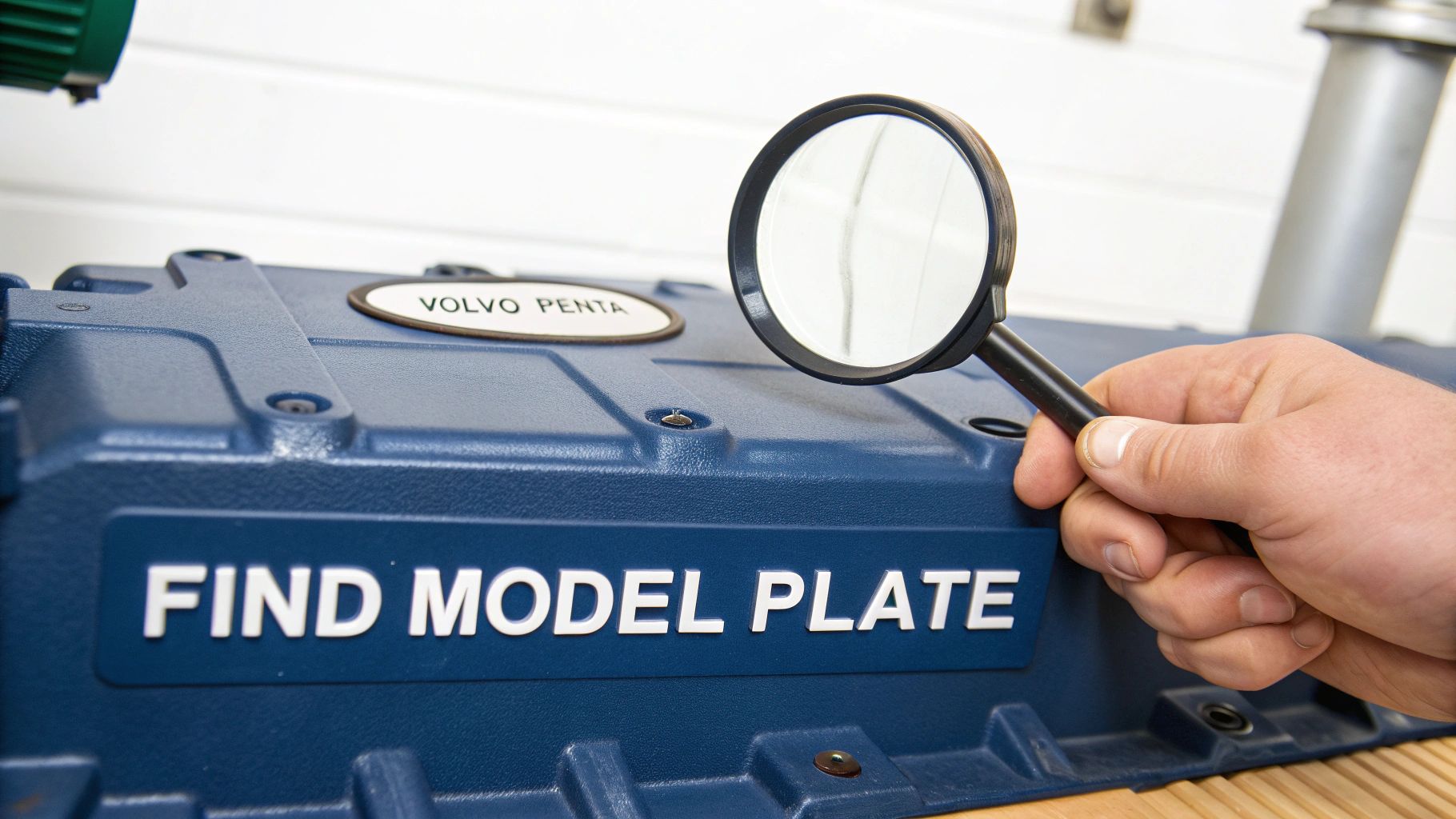
Trust me, this simple action is what separates a quick repair from a weekend-long ordeal. It's the only way to be sure you aren't confusing two models that look identical on the outside but have totally different guts.
Finding the Identification Plate
Volvo Penta tucks these ID plates in a few usual spots, but the exact location can change depending on the model and year. You might have to do a little hunting, especially on older engines where years of grease and paint have done their best to hide it.
Here are the most common places to start your search:
- Engine Valve Cover: This is usually the easiest spot. Check the top or side of the cover.
- Engine Block: Scan the side of the engine block itself, often near the starter or where the engine meets the outdrive.
- Transom Shield: For sterndrives, you'll almost always find a plate on the transom shield assembly, which you can see from inside the boat.
- Flame Arrestor Cover: On a lot of gas engines, there's an information decal right on top of the flame arrestor.
Understanding the Model Number Structure
Once you've located it, you'll see the model number isn't just a jumble of characters. It's telling you a story about your engine. Each part of the code gives you specific details that help zero in on the correct Volvo Penta parts diagram.
Your model and serial number are the foundation for any successful repair. Having them ready makes the lookup process on MacombMarineParts.com incredibly fast and accurate, connecting you directly to the correct schematics and parts lists.
Let's take a common gasoline sterndrive model number, something like "5.7GXi-G." Here’s a quick breakdown of what that code is telling you:
- 5.7: This is the easy one—it’s the engine's displacement in liters (5.7L).
- GXi: This part identifies the fuel system and performance level. In this case, it stands for Gasoline Multi-Port Fuel Injection.
- -G: That last letter is the generation code, and it’s a big deal. This little letter marks significant changes or updates made during that model's production run. A "G" generation engine can have completely different parts than an "F" generation, even if they're both labeled as 5.7GXi.
Getting Your Hands Dirty: Annotated Diagrams for Popular Volvo Penta Sterndrives
Alright, you've figured out your model number and you know how to read a schematic. Now for the fun part: putting that knowledge to work. This is where we’ll dig into the diagrams for some of the most common Volvo Penta sterndrives you'll find out on the water—the venerable SX, DPS, and DP series. These drives are absolute workhorses, but even the best marine gear needs attention now and then.
The key to a successful repair is understanding how everything fits together, and an exploded view diagram is your best friend for that. Below, we're breaking down the critical assemblies you'll most likely be working on, like the upper and lower gear units, and pointing out the parts that tend to wear out first. Knowing what each component does is half the battle in diagnosing a problem before it gets serious.
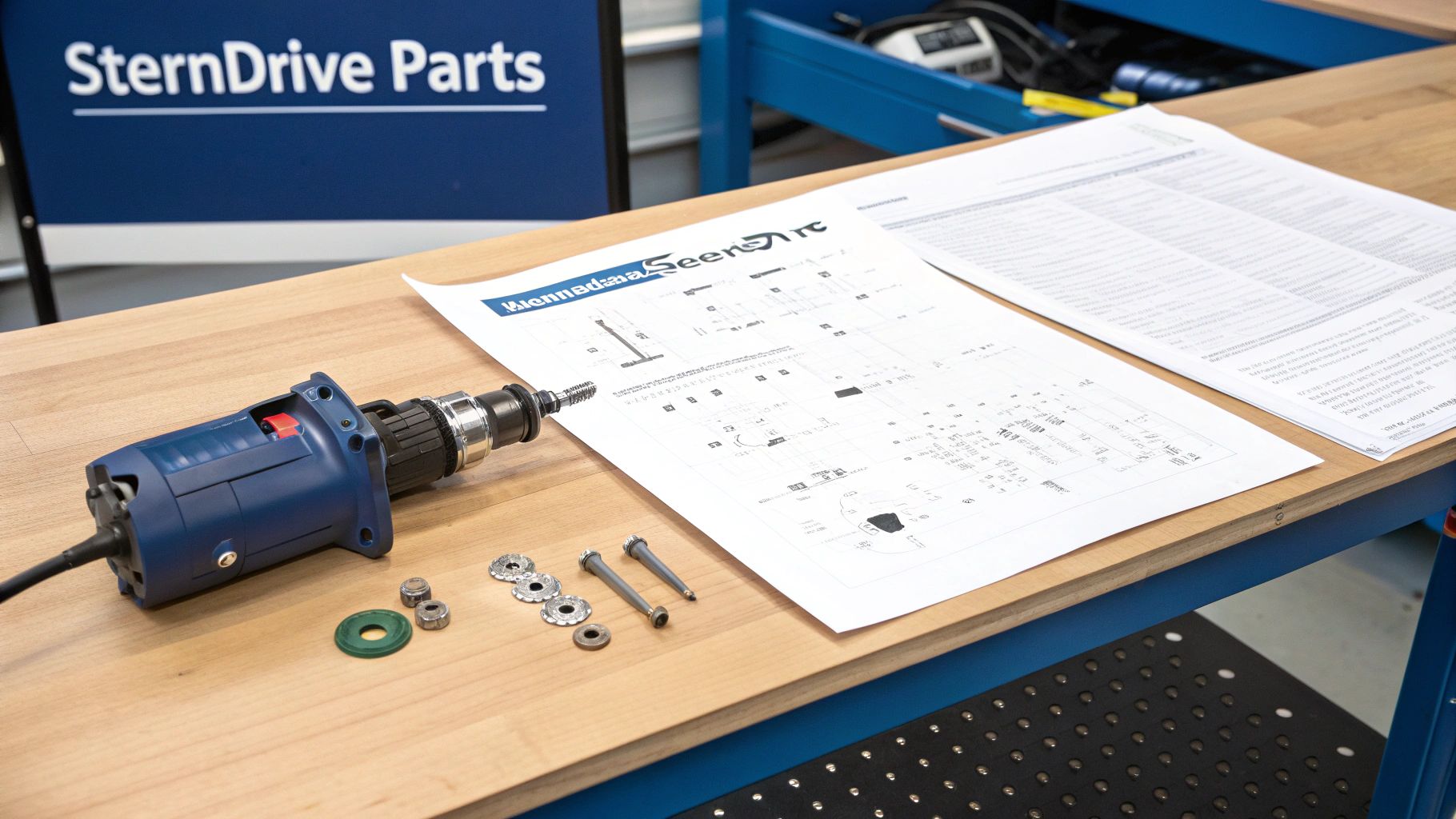
SX and DPS Series: Inside the Upper Gear Unit
The upper gear unit is the bridge between your engine and the outdrive, taking all that horsepower and redirecting it. It’s a tight package of precision gears and bearings under a ton of stress. When you pull up a Volvo Penta parts diagram for an SX or DPS drive, keep a close eye on these usual suspects.
- U-Joint Assembly: This is what connects the engine’s driveshaft to the sterndrive. If you're hearing a clunking noise when turning or shifting, or feeling excessive vibration, your U-joints are likely the culprit.
- Input Shaft Bearings and Seals: These guys support the input shaft and, just as importantly, keep the gear oil inside. A high-pitched whine from the upper unit is a classic sign of a failing bearing. See an oily sheen on the water behind your boat? That’s your seal telling you it’s given up.
- Drive and Driven Gears: These are the gears that make the 90-degree turn. If you hear grinding noises, it could mean you have chipped or worn teeth. Don't ignore this one—it can lead to total failure if left unchecked.
Once you’ve identified the bad part on the schematic, finding the right replacement U-joint or seal kit on MacombMarineParts.com is a breeze. Their listings are clear, so you can be sure you're ordering the exact component for your drive's generation.
DP Series: Lower Gear Unit and Propeller Shafts
The DP (Duoprop) series is legendary for its twin counter-rotating props, which deliver incredible bite and maneuverability. That performance comes from a more complex gearset in the lower unit, making an accurate diagram an absolute necessity for any repairs.
Here are the common wear items to look for in the lower unit:
- Propeller Shaft Seals: With two props, you have multiple seals that are critical for keeping water out of the gearcase. If you drain your gear lube and it looks milky, your seals have failed. It’s a dead giveaway.
- Vertical Shaft and Bearings: This shaft brings the power down from the upper unit. Worn bearings here create a deep rumbling sound that gets louder as you increase engine RPM.
- Shifter Mechanism: The parts that engage forward and reverse can wear out, making shifting difficult or causing the drive to pop out of gear unexpectedly.
For related systems that integrate with the drive, like the power steering, you can find more detailed information on specific parts. For example, learning more about the Volvo Penta SX power steering cylinder can help you understand the complete picture.
The global recreational boating market hit around $39 billion in 2023, and the sterndrive segment makes up a huge piece of that pie—about 35% of all marine propulsion units sold. The easy availability of detailed parts diagrams is the backbone of the aftermarket that keeps all these boats running.
By using the detailed schematics on MacombMarineParts.com, you can see exactly where every part goes and how it connects to its neighbors. It makes taking things apart and putting them back together a much less intimidating job. This visual guide helps prevent expensive mistakes and ensures every last seal, bearing, and gear is installed exactly where it belongs.
Detailed Schematics for Common Volvo Penta Gasoline Engines
While the sterndrive gets the glory for putting power to the water, the gasoline engine is the heart and soul of your boat. This section dives into the Volvo Penta parts diagram for the real workhorses—the popular 4.3L, 5.0L, and 5.7L series engines found in countless boats. Getting comfortable with the diagrams for key systems like cooling, fuel, and ignition is the secret to both simple maintenance and tracking down those frustrating, complex problems.
Just like with the drives, an exploded view diagram for your engine lays everything out logically. It lets you see how all the different systems connect and work together, which makes it infinitely easier to figure out what's wrong and pinpoint the exact part you need for the fix. We'll walk through the critical components in these systems and flag the common failure points you should always keep an eye on.
The Cooling System Diagram
An engine's cooling system is its lifeline, especially when it’s battling the harsh marine environment. When you pull up a cooling system schematic on MacombMarineParts.com, you’ll see it’s broken down into two main circuits: the raw water side and the closed cooling (antifreeze) side.
It's that raw water circuit where most headaches begin. Pay close attention to these parts on your diagram:
- Seawater Pump and Impeller: That little rubber, star-shaped impeller inside the seawater pump is responsible for pulling in all the raw water your engine needs to stay cool. It’s a wear item, plain and simple, and should be checked every year. A shredded or brittle impeller is the number one cause of engine overheating, so don't neglect it.
- Thermostat and Housing: The thermostat is the gatekeeper of your engine's temperature, controlling how coolant flows. If your engine is running way too hot or can't seem to warm up, the thermostat is the first place to look. The diagram will show you exactly where it lives and which gaskets you'll need for the swap.
- Hoses and Clamps: Over years of heat cycles and exposure, rubber hoses get brittle and crack, and hose clamps corrode and lose their grip. The diagram is a lifesaver here, giving you the part numbers for every pre-formed hose so you get a perfect fit instead of wrestling with a generic piece of tubing.
Fuel and Ignition System Schematics
Your fuel and ignition systems have to work in perfect harmony to deliver reliable power. When your engine is hard to start, stumbles at idle, or just feels gutless, the diagrams for these systems are your best diagnostic friends.
A good fuel system diagram is worth its weight in gold when you're chasing a fuel delivery gremlin. It lets you methodically check every single component, from the tank all the way to the injectors, so you don't waste time and money throwing parts at a problem.
Looking at a typical 5.7L fuel system diagram, you'll want to find these key players:
- Fuel Pump Assembly: This could be a low-pressure pump, a high-pressure pump, or a complete fuel pump module. When a pump starts to fail, it can cause all sorts of performance issues. Getting to know its components is crucial, and you can learn more about the complete Volvo Penta fuel pump assembly to really understand how it works and what goes wrong.
- Fuel Filters and Water Separators: These are your engine's first line of defense against dirt and water in your fuel. The diagram shows you right where they are and which specific filter element to use—a non-negotiable routine maintenance item.
- Injectors and Fuel Rails: On fuel-injected engines, the diagram will map out the layout of the fuel rails and show you where each individual injector is placed.
Likewise, the ignition system schematic will detail the spark plugs, ignition coils, distributor (if you have an older model), and all the associated wiring. By cross-referencing the part numbers from these diagrams with the huge catalog at MacombMarineParts.com, you can order the exact OEM or top-tier aftermarket parts you need with total confidence, getting your engine's performance and reliability right back where it should be.
Using Diagrams to Troubleshoot Common Engine and Drive Issues
A Volvo Penta parts diagram is way more than just a shopping list for parts; it's one of the best diagnostic tools you can have in your back pocket. When your engine or drive starts acting up, a good schematic can turn a mystery into a logical, step-by-step troubleshooting process. Forget the guesswork. The diagram lets you see exactly how the systems are supposed to work, helping you zero in on likely failure points before you even touch a wrench.
This is how experienced mechanics save so much time and avoid ordering the wrong parts. By understanding how all the pieces on the diagram fit together, you can diagnose problems with much greater accuracy. This lets you build a complete parts list so you can get everything you need in one shot from MacombMarineParts.com.
Tracing an Engine Overheating Problem
Nothing ruins a day on the water faster than an overheating engine. When you see that temperature gauge creeping up, your first move should be to pull up the cooling system diagram for your engine.
This schematic lays out the entire raw water cooling circuit in front of you. You can literally trace the path of the water from the intake all the way through the engine. This visual map immediately tells you which components to check.
- Seawater Pump (Callout #1): Find the pump on the diagram first, then locate it on your engine. The schematic will show the impeller inside, which is the prime suspect. A worn-out or shredded impeller is the #1 cause of overheating because it just can't move enough water.
- Thermostat and Housing (Callout #2): Follow the hoses from the pump to the thermostat housing. A thermostat that's stuck closed will block coolant flow entirely and cause a rapid overheat. The diagram confirms its location so you can pop it out for a quick test.
- Hoses and Heat Exchanger (Callout #3): The diagram shows every single hose in the system. Use it like a checklist to inspect for blockages from debris, kinks, or collapsed sections that might be cutting off water flow.
By methodically working your way through the diagram, you can pinpoint the real problem with confidence.
Diagnosing a Sterndrive Water Leak
Finding water sloshing around in your bilge is a serious problem, and a leaky sterndrive is often the culprit. The sterndrive diagram, especially the transom shield assembly section, is your guide to finding that leak. Water getting in here is almost always from a failed seal or a cracked rubber bellows.
When you see water where it shouldn’t be, the sterndrive diagram is your first line of defense. It clearly illustrates the bellows and seals that separate the ocean from the inside of your boat, turning a high-stress problem into a manageable repair.
The diagram will point you right to the most common failure points:
- U-Joint Bellows: This is the big, accordion-like boot that protects the U-joints and creates a watertight seal. A tear here will let a scary amount of water into your bilge.
- Exhaust Bellows: A leak here is less critical, but a split can still let water seep in, especially when the boat is sitting still in the water.
- Shift Cable Bellows: This much smaller bellows seals the hole where the shift cable passes through the transom. It gets brittle with age and can easily fail from the constant movement.
Once you’ve used the Volvo Penta parts diagram to identify the bad part, you can order the right bellows kit and all the necessary seals directly from MacombMarineParts.com. That ensures you get a fast, reliable repair that gets you back on the water without worry.
Choosing Between OEM and Aftermarket Volvo Penta Parts
So, you've used a Volvo Penta parts diagram to track down the exact part you need. Now comes the big decision: what kind of replacement part should you buy? The choice between OEM, remanufactured, and aftermarket parts can make a real difference in your boat's performance, how reliable it is, and what's left in your wallet. Knowing the pros and cons of each is key to making a smart purchase.
Original Equipment Manufacturer (OEM) parts are the real deal—they're identical to what was installed in your engine or drive at the factory. Made by or for Volvo Penta, they guarantee a perfect fit and the same material quality and performance standards you'd expect from a brand-new engine. When it comes to critical internal components or sensitive electronics, going with OEM is the safest bet for longevity and compatibility.
Remanufactured Parts: The Smart Middle Ground
Volvo Penta's remanufactured (or "reman") parts program strikes an excellent balance between quality and value. Don't mistake these for simple repaired parts; they are completely torn down, cleaned, inspected, and rebuilt to the latest factory specs using genuine OEM components. In many cases, this process produces a part that's just as good as—or sometimes even better than—the original.
This program is a fantastic way to save some cash. Remanufactured components typically cost 30-50% less than new OEM parts but deliver the same level of performance. It's a trusted option in the industry, with marine service shops now using reman parts for roughly 40% of all major component replacements. You can check out the full Volvo Penta reman program to see just how much is available.
When to Consider High-Quality Aftermarket Parts
Aftermarket parts come from companies other than Volvo Penta. While the quality can be all over the map, a reputable aftermarket brand can be a solid, cost-effective alternative for certain items. Things like anodes, filters, impellers, and gaskets are often perfect candidates for high-quality aftermarket replacements.
For routine maintenance items where you need reliable performance without the OEM price tag—like a zinc anode for an SXA or DPS upper gear case—a trusted aftermarket part gets the job done right.
Ultimately, the right choice boils down to the specific part and your budget. For the heart of your engine and drive, I'd strongly recommend sticking with OEM or remanufactured. But for common wear-and-tear items, a quality aftermarket part from MacombMarineParts.com can give you excellent value without sacrificing reliability.
Why MacombMarineParts.com Is Your Best Parts Source
Once you've wrestled with a Volvo Penta parts diagram and finally identified that elusive part number, the job is only half done. Now comes the real test: getting your hands on a high-quality replacement without the runaround. That’s where we come in. We built MacombMarineParts.com from the ground up to be the simplest, most reliable way to get the right parts in your hands and get you back on the water.
We stock thousands of parts, from genuine OEM and remanufactured components to top-tier aftermarket alternatives. This isn’t just about having a massive catalog; it's about giving you choices. Whether you need a perfect factory match or a budget-friendly solution that doesn't compromise on quality, you’ll find it here. You can tackle your repairs knowing the parts you install are built to last.
More Than Just a Parts Store
At MacombMarineParts.com, we know that a successful repair depends on more than just the component itself. It requires confidence. Our entire website is designed to work hand-in-glove with the schematics you’re using. Just punch in the part number you found, and our system takes you straight to the product page. No guesswork, no scrolling through endless lists, and no ordering the wrong thing.
We back up our inventory with the kind of support and service that actually makes a difference:
- Expert Customer Support: Stuck with a discontinued part number or just not 100% sure you've got the right item? Our team knows their stuff and is ready to help you cross-reference and confirm your order.
- Competitive Pricing: We keep our prices fair because we believe maintaining your boat shouldn't break the bank. You'll find great value on everything from small maintenance items to major engine components.
- Fast, Reliable Shipping: To get you back on the water faster, we offer free ground shipping on eligible orders within the Continental US.
- Secure and Simple Ordering: With straightforward return policies and multiple secure payment options, buying from us is always a safe and hassle-free experience.
When you're facing a job like replacing a worn-out transom seal kit, having a supplier you can trust is non-negotiable. Our goal is to be more than just a place you buy parts from—we want to be the resource you count on to keep your boat running right.
Common Questions Answered
Having the right part number is half the battle. Here are a few answers to the questions we hear most often when boaters are digging through Volvo Penta diagrams and ordering parts.
Where Can I Find The Model Number On An Older Volvo Penta Engine?
On older Volvo Penta engines, the first place to look for the identification plate is usually right on top of the valve cover. If it's not there, give the engine block a thorough inspection, especially around the starter. Another common spot is the transom shield assembly inside the boat.
If the plate is corroded, painted over, or just unreadable, don't worry. The team at MacombMarineParts.com has seen it all and can often identify your model from a few clear photos.
What Should I Do If The Part Number From The Diagram Is Discontinued?
This happens all the time as parts are improved or updated. When a part is discontinued, Volvo Penta almost always issues a "superseded" or replacement part number.
The lookup tools on MacombMarineParts.com are designed to automatically show you the updated number. If for some reason it doesn't pop up, their customer service crew can cross-reference the old number to find the correct modern equivalent or a high-quality aftermarket alternative.
A common trap boaters fall into is a mid-year production change. This means two engines that look identical might use different parts. Always, always check your serial number against the notes in the diagram.
The Diagram Shows Two Similar Parts For My Model. How Do I Choose?
If you see two options for what looks like the same part, it’s almost certainly due to a mid-year production change. This is where your serial number is critical.
Look closely at the diagram's footnotes or the remarks column for serial number breaks (you'll see notes like "For serial numbers up to…"). You have to match that information to your engine's specific serial number to pick the right one. When in doubt, it’s always better to confirm with the support team at MacombMarineParts.com before you click "buy." A quick call can save you a lot of hassle.
For all your Volvo Penta needs, from expert advice to the widest selection of OEM and aftermarket components, trust MacombMarineParts.com. Find your parts today by visiting https://macombmarineparts.com.