


Dielectric Silicone Grease | Ancor 700115
Dielectric Silicone Grease | Ancor 700115
Ancor
In stock
Couldn't load pickup availability
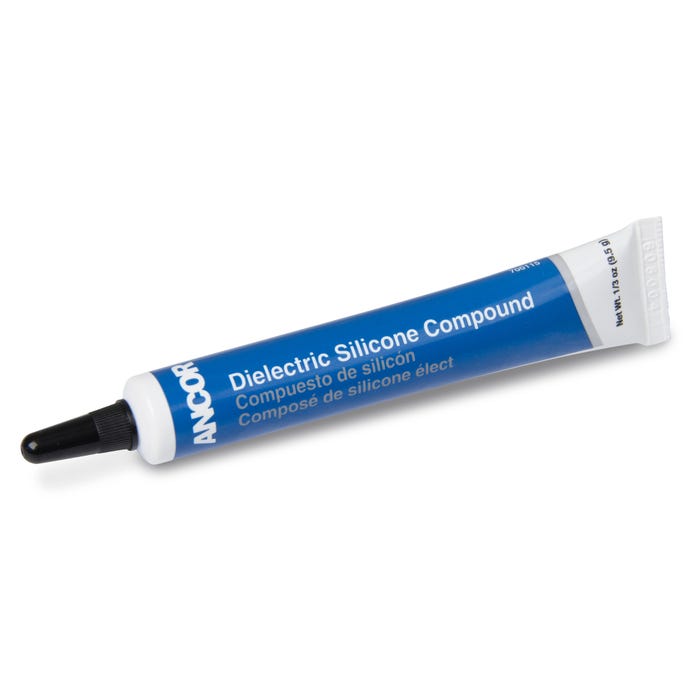
Ancor Dielectric Silicone Grease | 700115 | Marine Electrical Connection Sealant | 1/3 oz Tube
Ancor #700115 is a dielectric silicone grease designed for marine electrical connections. Applied to spark plug wire boots, connector terminals, battery terminals, and any exposed electrical interface, dielectric grease seals out moisture, prevents corrosion, and stops the oxidation that causes high-resistance connections and intermittent electrical faults on boats. Stable from -55°F to 550°F and insoluble in water, mineral oils, vegetable oils, methanol, ethanol, glycol, and glycerin. Ancor is a leading U.S. marine electrical brand trusted by boatbuilders and marine electricians.
Part Details:
- Part Number: 700115
- SKU: ANC-700115
- Manufacturer: Ancor
- Type: Dielectric Silicone Grease
- Size: 1/3 oz (approx. 9.4g) tube
- Temperature Range: -55°F to 550°F (-48°C to 288°C)
- Resistant To: Water, mineral oils, vegetable oils, methanol, ethanol, glycol, glycerin
- Applications: Spark plug wire boots, distributor caps, connector terminals, battery terminals, switches, trailer wiring connectors
- Condition: New
Additional Information
Where to Use Dielectric Grease on a Boat:
Marine environments are dielectric grease's primary use case — salt air, spray, and bilge moisture attack every exposed electrical connection on a boat. Apply a thin layer of Ancor 700115 to the following locations during installation or any time a connection is opened for service:
- Spark plug wire boots — apply inside the boot where it seats over the plug terminal and at the distributor cap tower; prevents boot from bonding to the plug and makes future removal easier
- Multi-pin connectors — apply to the male pins before mating; seals the connector interface against moisture intrusion that causes pin corrosion and voltage drop
- Battery terminals — apply to the post and terminal contact surfaces after tightening; prevents the white sulfate oxidation that builds up on marine battery terminals
- Trailer wiring connectors — trailer lighting connectors are submerged every launch and retrieval; packed with dielectric grease they resist corrosion significantly longer than bare connectors
- Switches and fuse holders — apply to switch terminals and fuse blade contacts in bilge and cockpit locations exposed to spray and moisture
- Fuel sender and bilge pump connections — any connection in the bilge or below the waterline should be protected with dielectric grease at every service
Dielectric Grease vs. Corrosion Inhibitor Spray — When to Use Which:
Dielectric grease and corrosion inhibitor sprays (such as CRC 6-56 or Boeshield T-9) serve different purposes. Dielectric grease is a thick, stay-in-place grease applied to connector interfaces before mating to create a permanent moisture barrier inside the connection. Corrosion inhibitor sprays are applied to the exterior of already-assembled connections to displace existing moisture and leave a protective film. For new installations or any time a connection is opened, dielectric grease at the interface is the correct approach. Corrosion sprays are better suited for treating existing connections without disassembly.
Frequently Asked Questions
1. Does dielectric grease conduct electricity?
No — dielectric grease is an electrical insulator, not a conductor. It works by sealing the connection interface against moisture and oxygen, preventing the oxidation and corrosion that increase resistance. The metal-to-metal contact at the connector terminals carries the current; the grease surrounds and seals that interface without interfering with conductivity. Do not apply so much grease that it coats the contact surfaces themselves — a thin layer on the connector body and terminal housing is correct.
2. Can I use dielectric grease on battery terminals?
Yes — apply Ancor 700115 to battery post and terminal contact surfaces after the terminal is tightened and torqued to spec. Dielectric grease on a battery terminal prevents the sulfate oxidation buildup that increases terminal resistance and causes starting problems. Do not apply grease between the terminal clamp and the post before tightening — apply after the terminal is secured.
3. How much grease should I apply to a spark plug boot?
A small amount is sufficient — apply a thin film inside the boot's terminal cavity where it seats over the spark plug terminal. Excess grease is not harmful but is unnecessary. The goal is to coat the interface to prevent moisture from entering the boot-to-plug junction, not to fill the boot with grease.
4. Is the 1/3 oz tube enough for a full boat?
The 1/3 oz tube is sized for spot application — treating one or two connectors, a set of spark plug boots, or trailer plug contacts. For a comprehensive electrical service touching all connections on a larger boat, you may want multiple tubes. Ancor 700115 has a long shelf life when stored with the cap sealed, so having an extra tube on hand for routine maintenance is practical.
! Compatibility references are provided for informational purposes only and do not constitute a fitment guarantee. Part numbers, application listings, and "replaces" cross-references are based on manufacturer data and are intended as a starting point for identification — not a guarantee of fit for your specific engine, hull, or installation.
Buyer is solely responsible for verifying compatibility with their engine model, serial number, model year, and trim configuration before purchase. If you are unsure whether this part fits your application, contact MacombMarineParts.com before you buy — we're available via text, email, or online chat to help verify compatibility for your specific application.
MacombMarineParts.com is not liable for parts ordered based on assumed fitment. Returns due to buyer-selected incorrect fitment are subject to our standard return and restocking fee policies.