


Pencil Anode 1/4 inch NPT Zinc | Sierra 23-6400
Pencil Anode 1/4 inch NPT Zinc | Sierra 23-6400
Sierra
Out of stock
Couldn't load pickup availability
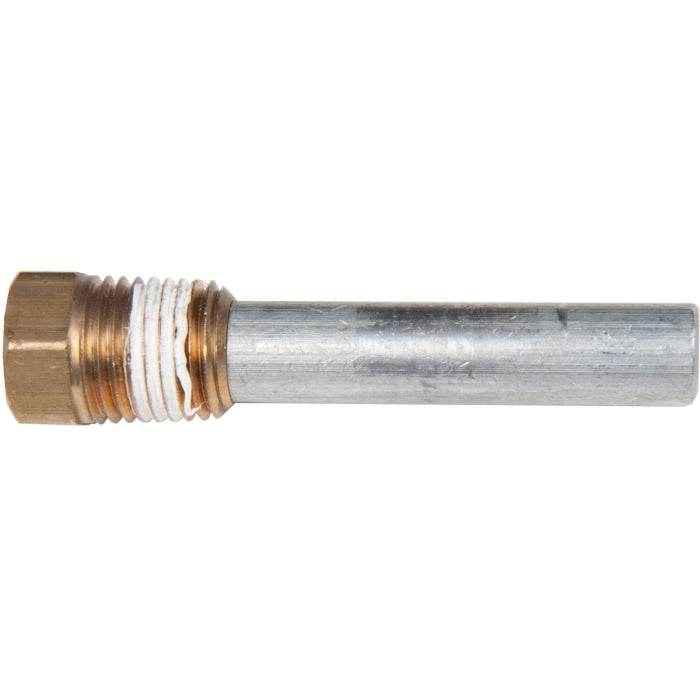
Sierra 23-6400 Zinc Pencil Anode | 1/4" NPT | 1-3/4" x 3/8" | Chrysler, Crusader, Westerbeke, Kohler
The Sierra #23-6400 is a zinc pencil anode with 1/4" NPT threads. 1-3/4" length, 3/8" diameter. Threaded directly into engine block or heat exchanger pencil anode ports to protect the engine's raw water cooling circuit from galvanic corrosion. Replaces Chrysler 3527906, Crusader R168005, Westerbeke 11885, and Kohler 260085.
Product Details:
- Part Number: 23-6400 (Sierra)
- SKU: SIERRA-23-6400
- Manufacturer: Sierra
- Type: Pencil Anode — Zinc
- Thread Size: 1/4 in. NPT
- Length: 1-3/4 in.
- Diameter: 3/8 in.
- Material: Zinc
- Condition: New
Cross-Reference — Replaces:
- Chrysler: 3527906
- Crusader: R168005
- Westerbeke: 11885
- Kohler: 260085
Additional Information
What a Pencil Anode Does — Galvanic Corrosion Protection:
Pencil anodes protect the internal raw water cooling circuit of inboard marine engines from galvanic corrosion. Dissimilar metals in the raw water circuit — including cast iron block passages, bronze fittings, brass heat exchanger tubes, and aluminum components — create galvanic cells when immersed in raw (sea or lake) water. In a galvanic cell, the less noble metal corrodes preferentially. Without a sacrificial anode, this galvanic action attacks the engine block water jackets, heat exchanger tubes, and other internal cooling circuit components — causing pitting, perforation, and coolant or raw water leaks.
The zinc pencil anode is the least noble (most active) metal in the circuit. By inserting it directly into the raw water flow path, the zinc corrodes preferentially — sacrificing itself to protect the surrounding engine metal. When the zinc is consumed, it must be replaced; a fully depleted anode provides no protection.
Pencil Anode Locations — Where They Are Installed:
Pencil anodes are installed in threaded ports on the engine block raw water passages, heat exchanger end caps, and exhaust manifold water jackets. Common locations on Chrysler, Crusader, Westerbeke, and Kohler marine engines include:
- Engine block raw water jacket ports (typically 2–4 locations on inline and V-block engines)
- Heat exchanger end caps or headers
- Exhaust manifold water jacket ports
Refer to the service manual for your specific engine to identify all pencil anode locations. Missing or depleted anodes at any location leave that section of the raw water circuit unprotected.
Zinc vs. Aluminum vs. Magnesium — Anode Material Selection:
Pencil anodes are available in zinc, aluminum, and magnesium. The correct material depends on the water type where the vessel operates:
- Zinc — the Sierra 23-6400; correct for salt water and brackish water applications
- Aluminum — preferred for salt water by some specifications; provides slightly more protection than zinc in high-salinity environments
- Magnesium — for fresh water only; magnesium is too active for salt or brackish water and will be consumed too rapidly
Confirm the correct anode material for your operating environment before ordering. For fresh water engines, a magnesium pencil anode of the same thread specification may be the correct choice. Contact us at MacombMarineParts.com if you need fresh water or aluminum anode alternatives.
Service Interval — Replace Annually:
Inspect pencil anodes annually at spring commissioning and replace whenever the zinc has been consumed more than 50%. A zinc reduced to half its original size or less provides significantly reduced protection. At $9.95 per anode, annual replacement regardless of apparent condition is the lowest-cost corrosion protection available for an inboard engine. Never defer pencil anode replacement — replacing a corroded heat exchanger or engine block water jacket costs orders of magnitude more than routine anode service.
Thread Sealant — Use Carefully:
When installing pencil anodes, apply a minimal amount of non-hardening, water-resistant thread sealant (such as Teflon tape or paste) to the NPT threads to prevent seizing and ensure a water-tight seal. Do not coat the zinc anode body itself with sealant — the zinc must be in direct electrical contact with the engine metal and exposed to raw water flow to function. Sealant on the anode body will render it ineffective.
Installation Notes:
- Confirm thread size (1/4 in. NPT) and anode length (1-3/4 in.) match your engine's pencil anode ports before ordering
- Identify all pencil anode locations on your engine — replace all anodes at the same service
- Select correct anode material for operating water type (zinc for salt/brackish; magnesium for fresh water)
- Apply thread sealant to NPT threads only — do not coat the zinc anode body
- Do not overtighten — hand tight plus 1/4 turn is typically sufficient for NPT pencil anode fittings
- Replace annually or whenever anode is 50% or more consumed
Frequently Asked Questions
1. What engines does this pencil anode fit?
The 23-6400 replaces Chrysler 3527906, Crusader R168005, Westerbeke 11885, and Kohler 260085. Confirm thread size (1/4 in. NPT) and anode length (1-3/4 in.) match your engine's pencil anode port specification before ordering.
2. How often should pencil anodes be replaced?
Inspect annually and replace whenever 50% or more of the zinc is consumed. Annual replacement at spring commissioning is recommended regardless of apparent condition — a $9.95 anode prevents hundreds or thousands of dollars in corrosion damage to internal engine components.
3. Can I use this anode in fresh water?
Zinc anodes are formulated for salt water and brackish water. For fresh water engines, a magnesium pencil anode of the same 1/4 in. NPT thread size is typically the correct choice. Contact us at MacombMarineParts.com for fresh water anode alternatives.
4. How do I know when my pencil anode needs replacement?
Replace when 50% or more of the zinc body has been consumed. A significantly reduced anode provides little remaining protection. If the anode is completely consumed (threads only remaining), the engine has been operating without corrosion protection and internal components should be inspected for galvanic pitting.
5. Should I apply thread sealant when installing?
Yes — apply Teflon tape or non-hardening thread paste to the NPT threads to prevent seizing and ensure a water-tight seal. Do not apply sealant to the zinc anode body — the zinc must be in direct electrical contact with the engine metal and exposed to raw water to function as a sacrificial anode.
! Compatibility references are provided for informational purposes only and do not constitute a fitment guarantee. Part numbers, application listings, and "replaces" cross-references are based on manufacturer data and are intended as a starting point for identification — not a guarantee of fit for your specific engine, hull, or installation.
Buyer is solely responsible for verifying compatibility with their engine model, serial number, model year, and trim configuration before purchase. If you are unsure whether this part fits your application, contact MacombMarineParts.com before you buy — we're available via text, email, or online chat to help verify compatibility for your specific application.
MacombMarineParts.com is not liable for parts ordered based on assumed fitment. Returns due to buyer-selected incorrect fitment are subject to our standard return and restocking fee policies.